Over on John Scalzi's Whatever blog, where popular and/or controversial and/or multiply-commented posts are published with some regularity, the latest is Reporting Harassment at a Convention: A First-Person How To, a guest post by Elise Matthesen regarding a recent encounter with a sexual harasser at a convention and the procedures she followed in filing a formal complaint and report to the convention's committee and the harasser's employer, with suggestions and advice for others who wish to report similar incidents. Recommended reading for everyone, not just convention committees.
I posted the following as one of the 250+ comments there, but I'm going to publish it on its own here as well:
- - - - -
I’d like to tell a story. It’s a true story, but it’s an ugly story. It’s a story that still mystifies me in a lot of ways. But think it shows the importance of reporting harassment.
In the late 70′s, at a fairly small convention, two young female Star Trek fans reported to the con committte that they’d been molested by one of the attendees. I don’t know what the details were, but “molested” was the word used.
The committee acted promptly, to their credit, and confronted the suspect.
Here’s the problem: The young women had reported that their molester was “a guy named Bruce, from Arizona.”
I was the only guy named Bruce from Arizona at that convention. So it was me the concom came to.
I was completely mystified, and said so. I was taken to the young women for a visual confirmation.
I was NOT the guy they’d been molested by. They had never spoken with me, and I had never spoken with them. I was in the clear.
The molester was never identified, to the best of my knowledge. But if those young women had NOT reported the incident to the concom, if they instead had just passed the story around the gossipvine that they’d been molested by “Bruce from Arizona”, I might have been privately labeled as a creepy molester. (Since the two Trek fans looked about 14 or 15, possibly as a child molester.) And in that instance, I might never have found out about those allegations for months or possibly years.
This begs the question, of course, of why the guy chose to identify himself as “Bruce from Arizona”. And if he was deliberately falsifying his name, doesn’t that say his intent was to molest those young women? Was it just a name picked from the air? Or was he somebody who knew me, and for unknown reasons wanted any possible blowback to come back on me? Why would someone do that to me? This still mystifies me, nearly forty years later.
So, goddamn, ladies, REPORT, REPORT, REPORT! Because not only does it make it possible to have real consequences for harassers and to deter other harassers, it allows someone who’s been misidentified or falsely accused to try and clear their name.
- - - - -
(slightly edited for several typos in the original and a math error; this actually happened a bit less than forty years ago, not "over forty years" as I originally wrote.)
6/27/2013
This and That -- links, etcf.
Carried Away By Imagination. From the always amusing, frequently outstanding Tragedy Series webcomic.
 - - - - -
The iPad Commode Caddy. Only 99.95 from the Hammacher Schlemmer catalog. If the roll runs out, you can log onto drugstore.com and order more. Or, if you're actually thinking of ordering one of these (or, actually, anything from the H-S catalog), you might realize you have just too much money. (Sending half that money to me instead would help relieve that problem. No, don't thank me. I'm just that kind of guy.)
- - - - -
 Harry Connolly writes REMO WILLIAMS: The (Problematic) Adventure Begins, about the 1985 movie based on The Destroyer, a series of "Men's Adventure" paperbacks published since the 70's. Harry says he hasn't read any of the books, but I read a fair number back in the day. They were actually more of a satirical series in adventure clothing; the authors (Warren Murphy and Richard Sapir, mostly) routinely used issues of the day as springboards for the books' plots. Politically incorrect and definitely not sophisticated, but frequently amusing; the interaction between Remo and Chiun was often laugh-out-loud funny. I wouldn't recommend a steady diet of the books, but trying one or two when you're in the mood for brain-candy might be worthwhile.
Since I was working as a letter carrier and "going postal" was one of the social concerns back then (there were numerous incidents where postal workers cracked mentally and went on shooting sprees); I had a special appreciation for the particular volume pictured here. (Postal employees plot an armed revolt against the US.)
The first Destroyer adventure is available online as a free e-book: Created: The Destroyer. Several dozen other early volumes are available as e-books for $0.99-2.99. More recent physical books, including a 2010 fan-written anthology, are available from Amazon and other booksellers.
- - - - -
If Your Dog Could Text: Via Accordion Guy Joey Devilla, Text From Dog.
- - - - -
At Kung Fu Monkey, John Rogers writes "ARCANUM: Immortality Is So, So Creepy", an interesting post about some of the thinking behind his ongoing webcomic for Thrillbent. A quote:
- - - - -
In 1934 the newly formed Decca Records signed Bing Crosby as the first artist on their label. The second artist signed had a name that must have been a joy to small children and immature adults everywhere: "Whoopie John" Willphart, American polka pioneer:
Why, yes, the vocals (by Don Burqhardt) are a little creepy, aren't they?
 - - - - -
The iPad Commode Caddy. Only 99.95 from the Hammacher Schlemmer catalog. If the roll runs out, you can log onto drugstore.com and order more. Or, if you're actually thinking of ordering one of these (or, actually, anything from the H-S catalog), you might realize you have just too much money. (Sending half that money to me instead would help relieve that problem. No, don't thank me. I'm just that kind of guy.)
- - - - -
 Harry Connolly writes REMO WILLIAMS: The (Problematic) Adventure Begins, about the 1985 movie based on The Destroyer, a series of "Men's Adventure" paperbacks published since the 70's. Harry says he hasn't read any of the books, but I read a fair number back in the day. They were actually more of a satirical series in adventure clothing; the authors (Warren Murphy and Richard Sapir, mostly) routinely used issues of the day as springboards for the books' plots. Politically incorrect and definitely not sophisticated, but frequently amusing; the interaction between Remo and Chiun was often laugh-out-loud funny. I wouldn't recommend a steady diet of the books, but trying one or two when you're in the mood for brain-candy might be worthwhile.
 Since I was working as a letter carrier and "going postal" was one of the social concerns back then (there were numerous incidents where postal workers cracked mentally and went on shooting sprees); I had a special appreciation for the particular volume pictured here. (Postal employees plot an armed revolt against the US.)
The first Destroyer adventure is available online as a free e-book: Created: The Destroyer. Several dozen other early volumes are available as e-books for $0.99-2.99. More recent physical books, including a 2010 fan-written anthology, are available from Amazon and other booksellers.
- - - - -
If Your Dog Could Text: Via Accordion Guy Joey Devilla, Text From Dog.
- - - - -
At Kung Fu Monkey, John Rogers writes "ARCANUM: Immortality Is So, So Creepy", an interesting post about some of the thinking behind his ongoing webcomic for Thrillbent. A quote:
"In 1900 the percentage of the American population over the age of 45 was 17.8%. In 1950 it was 28.4%. As of the last census the share of the US population over 45 is 36.4%. Hell, the 65+ share's gone from 4.1% in 1900 to 13.3% in 2010. More and more people still in the society, with greater and greater influence, still constructing societal and legal norms based on emotional, psychological, cultural and technological frames of reference that are less and less relevant."
- - - - -
In 1934 the newly formed Decca Records signed Bing Crosby as the first artist on their label. The second artist signed had a name that must have been a joy to small children and immature adults everywhere: "Whoopie John" Willphart, American polka pioneer:
Why, yes, the vocals (by Don Burqhardt) are a little creepy, aren't they?
6/24/2013
Not The Arm: More Medical Fun & Adventure
So, spent about four hours at the Mayo Hospital Emergency Room Sunday.
When I woke up Sunday morning, I sat up... and fell over. I always thought "The room is spinning" was just a figure of speech. No, it actually felt like the room was spinning. And like I was being pulled strongly to the right while the world spun.
Over the years, I've had occasional instances of being light-headed, dizzy, or unsteady on my feet. This was worse than any of those times. At least an order of magnitude worse.
I fell back on the bed. After a moment or two the dizziness and vertigo stabilized. I tried sitting up again, more slowly... and the second wave of vertigo was even stronger than the first. This time I had rising nausea to go with it. Fortunately there was a plastic tub next to the bed that I was able to grab and dump the contents from to use as a catch basin; what I was having were not quite dry heaves.
The retching woke up Hilde, who asked me what was going on. "I am having severe dizziness and nausea. I think I need to go to the Emerency Room. I am scared." No joke about that last. It was frightening to be that helpless. If I'd been someone living alone, I would have had to crawl to the phone to get help.
Hilde called for Tabbi. We used Hilde's wheelchair to get me out to the car, then Tabbi went back in and brought Hilde out.
What I was diagnosed with was "Benign Paroxysmal Positional Vertigo". That will not be the name of my next rock band.
What it is, is that small granules in the inner ear, otoconia. break loose from their usual location and travel into part of the inner ear where they're not supposed to be, totally throwing off your perception of position and balance. The main treatment is a series of physical head-turning exercises that are intended to let the loose particles fall back into their normal area, where they can slowly dissolve.
The head exercises I was put through at the ER triggered more vertigo and nausea, but which calmed down after several moments focusing on a fixed object. Once I'd gone through them, there was a lot of subsequent relief. (The exercises are effective in about 80-90% of cases.) I was given several prescriptions for nausea and dizziness, and told I should not only continue the exercises at home if I continue to have problems, but make an appointment with the PT/Rehab department for further practive with the exercises.
I feel better. Tired, and still a bit light-headed, but at least I can walk and move around (a little carefully, to be sure). Probably shouldn't drive until I've recovered more.
One of the possible causes for BPPV is head trauma. I didn't get a hit on the head, but Saturday was spent clearing out the room I'd used for my (rarely-used) office and making it able to move our son Chris, who's moving back in with us for a while after several years living in Las Vegas, into that room. That raised a lot of dust and dander, and I spent the day wheezing and dripping and sneezing. When I sneeze, I tend to sneeze hard, and I wonder if forty or fifty hard sneezes, along with at least a hundred noseblows -- I went thru three handkerchiefs -- might have added up to the same effect a smack up the side of the head might have had.
Just another fun day at Chez' Arthurs. I could do with a little less fun of this sort.
- - - - -
Saturday night, among the other stuff cleaned out of the office was a box of papers and corespondence that had belonged to Edna, Hilde's mother, before Edna's death about ten years ago. We went thru it to see what should be kept, what trashed, and what sent to Edna's granddaughters. I was struck that the commonest theme in letters from family and old friends, most of whom were around Edna's age, was to talk about the latest medical problems they or others were having.
It led me to wonder if I spend too much time on this blog talking about our own medical issues. Let me know if I'm straying into TMI teritory, OK?
When I woke up Sunday morning, I sat up... and fell over. I always thought "The room is spinning" was just a figure of speech. No, it actually felt like the room was spinning. And like I was being pulled strongly to the right while the world spun.
Over the years, I've had occasional instances of being light-headed, dizzy, or unsteady on my feet. This was worse than any of those times. At least an order of magnitude worse.
I fell back on the bed. After a moment or two the dizziness and vertigo stabilized. I tried sitting up again, more slowly... and the second wave of vertigo was even stronger than the first. This time I had rising nausea to go with it. Fortunately there was a plastic tub next to the bed that I was able to grab and dump the contents from to use as a catch basin; what I was having were not quite dry heaves.
The retching woke up Hilde, who asked me what was going on. "I am having severe dizziness and nausea. I think I need to go to the Emerency Room. I am scared." No joke about that last. It was frightening to be that helpless. If I'd been someone living alone, I would have had to crawl to the phone to get help.
Hilde called for Tabbi. We used Hilde's wheelchair to get me out to the car, then Tabbi went back in and brought Hilde out.
What I was diagnosed with was "Benign Paroxysmal Positional Vertigo". That will not be the name of my next rock band.
What it is, is that small granules in the inner ear, otoconia. break loose from their usual location and travel into part of the inner ear where they're not supposed to be, totally throwing off your perception of position and balance. The main treatment is a series of physical head-turning exercises that are intended to let the loose particles fall back into their normal area, where they can slowly dissolve.
 |
| from dizziness-and-balance.com |
I feel better. Tired, and still a bit light-headed, but at least I can walk and move around (a little carefully, to be sure). Probably shouldn't drive until I've recovered more.
One of the possible causes for BPPV is head trauma. I didn't get a hit on the head, but Saturday was spent clearing out the room I'd used for my (rarely-used) office and making it able to move our son Chris, who's moving back in with us for a while after several years living in Las Vegas, into that room. That raised a lot of dust and dander, and I spent the day wheezing and dripping and sneezing. When I sneeze, I tend to sneeze hard, and I wonder if forty or fifty hard sneezes, along with at least a hundred noseblows -- I went thru three handkerchiefs -- might have added up to the same effect a smack up the side of the head might have had.
Just another fun day at Chez' Arthurs. I could do with a little less fun of this sort.
- - - - -
Saturday night, among the other stuff cleaned out of the office was a box of papers and corespondence that had belonged to Edna, Hilde's mother, before Edna's death about ten years ago. We went thru it to see what should be kept, what trashed, and what sent to Edna's granddaughters. I was struck that the commonest theme in letters from family and old friends, most of whom were around Edna's age, was to talk about the latest medical problems they or others were having.
It led me to wonder if I spend too much time on this blog talking about our own medical issues. Let me know if I'm straying into TMI teritory, OK?
6/21/2013
The Arm: The Weasel Gets Weird -- Unexpected Changes
In my last update to the seemingly neverending saga of coping with the breaking the hell out of my right arm last December, I reported that I'd decided to go ahead and have the revision surgery, replacing the standard replacement humerus head implanted in December (and which had seemed to be failing, resulting in quite a lot of pain) with a Reverse Shoulder Arthroscopy, a different type of replacement shoulder joint, hopefully (but not guaranteed) to reduce the amount and intensity of pain I was having. That surgery was scheduled for June 28th.
And then, beginning last weekend, an unexpected thing started happening.
The arm started hurting less.
Quite a lot less. I've gone from six extra-strength Tylenol and two Aleve (or, occasionally, one Aleve and a Celebrex) per day (about the maximum dose you're supposed to take per day, or start worrying about liver and kidney damage), all the way down to one or two Tylenol and one Aleve.
I don't know why it's hurting less. No apparent rhyme, no apparent reason. I don't know if it's going to last, or if the pain will rack back up at some unknown future date. But you'd think I'd be relieved and grateful for the change.
In actuality, I experienced an anxiety attack that came close to panic.
For the first several months after the acccident, I seemed to be making slow but steady progress in recovery. So I thought I'd probably be able to go back to work sometime in late spring. Then the arm started getting worse again in late March, and planning on the future went into a cocked hat.
When I finally decided, about two weeks ago, to go ahead with the second surgery, it meant that I'd know what my life would be like for at least rest of the summer and most of fall: Surgery at the end of June, the arm in a sling and immobilized 24/7 for at least six weeks, followed by at least several months of physical therapy. After that, things would be uncertain again until it became clear if the second surgery had made any improvement. But at least I knew what would be happening for the next four months.
But when the arm suddenly started hurting less, I had to start wondering if the second surgery was absolutely necessary. The arm still aches, but the aching is a lot less intense, and I've had very few of the sharp stabbing pains I was having before. Two weeks ago I was at the point where I was sure I needed the new surgery. And now... I'm not sure.
Which makes the future very uncertain again. Which is very upsetting and anxiety-inducing.
So. After nearly a week of the lower pain levels, a few decisions have been made. The revision surgery has been cancelled. I'll be referred to a physiatrist, a specialist in Physical Medicine and Rehabilitation. We'll try and work with the arm to get its strength and stamina back, or at least better.
I'm still, whatever happens, going to end up with pretty significant limits on how high I can reach with the arm, and how much I can carry. But the pain has been the most compelling problem these last months.
I also had an out-of-pocket consultation with the doctor who does Hilde's pain-management for her own significant problems. I got a fairly long list of non-surgical, non-narcotic treatments and medications that might be useful in dealing with the remaining pain. (One of the suggestion was for adhesive Lidocaine patches. Hilde used those for pre-surgical pain before one of her joint replacements some years ago, and we still had a partial box way at the back of a closet shelf. So I tried one today for the aching, and it helped significantly. This makes me hopeful that I can continue to keep the pain at tolerable levels.)
(Hilde and I get most of our medical care from Mayo, who I mostly think of as wonderful. But surprisingly the only pain-management service Mayo has is part of the Neurology department, and it only treats back pain.)
There are still a lot of "If's" and "Maybe's" and "Possibly's" floating around in the forthcoming months. But for the moment, things are better than they have been.
In the last update, I said the pain was like having a bad-tempered weasel strapped to my arm. It growled a lot, and sometimes started clawing and biting at the arm. Well, at least for the time being, it's being a lot nicer, growling less, and even sleeping some of the time.
 |
| A well-behaved weasel. |
6/16/2013
Data Point: Re the SFWA Bulletin
Part of the recent kerfuffle in SFWA (Science Fiction Writers of America) was over Issue #200 of the SFWA Bulletin using a warrior woman in a chainmail bikini (on a snow-covered mountainside!) for its cover image.
I was a SFWA member from the late 1980's until 2009. (I let my membership lapse then because I hadn't written or sold anything for three years by that point.) Since I tend to keep anything printed on paper longer than any sensible person would, I thought I'd go thru the back issues of the Bulletin I still had accessible, and see if anything similar had ever been used on a cover.
It turned out I had 55 issues from 1988 to 2005 available on my shelves. (There are more unshelved issues in various boxes, but I didn't want this to turn into a Major Project.) Those earliest issues, under the editorship of George Zebrowski and Pamela Sargent, used photos for their covers:

Mark McGarry was the next editor, and he tended to use fan-art or repurposed professional art for the Bulletin covers. Mark Kreighbaum followed, and tended to use semi-abstract digital art for the issues he edited.
The closest thing I found to a "cheesecake" cover was this George Barr cover under McGarry's editorship. The slim, aesthetic alien might be considered "beefcake".

To find a woman in a skimpy outfit, you have to look a little closer, in the background behind the central figure.

Shades of some of the costumes on the original Star Trek! Is it sexy? Yes. More to the point, though: Is it absurd? Barr's illustration looks like a desert environment, and most of the characters seen are wearing loose and/or skimpy clothing. So I don't think it's completely absurd or ridiculous. (One might complain she's overdressed -- did I just say that? -- in a fashion sense for a casual trip to the marketplace.)
Compare that to wearing a metal (!) chainmail (!) bikini (!) in the snow (!!!).
So overall, from the issues I have on hand, I'd have to say that the SFWA Bulletin has pretty well avoided depicting unrealistic women on its covers.
The woman depicted on Bulletin #200's cover is actually supposed to be Red Sonja, the character originally created in one of Robert E. Howard's stories. The notorious chainmail bikini actually originated in the Conan comic book version published by Marvel in the 1970's. But that wasn't what Red Sonja originally wore in that comic. A little history:
The original artist for the Conan comic was Barry Windsor-Smith, and the outfit he dressed Red Sonja in was this one:

Red Sonja was originally a pirate, so the Howard/Krenkel version makes a lot of sense: Loose clothing for fast movement on deck, and, hey, you really don't want to wear a lot of heavy armor or chainmail when one of the main dangers in a shipboard melee is getting knocked or pushed overboard.
On the Windsor-Smith version, the bare legs and granny-panties are problematic, but the chainmail shirt gives good protection to torso and arms; it's even got a high collar for some neck protection as well.
And then we come to the chainmail bikini. *sigh* This is a ridiculous costume. This is an absurd costume. It's been ridiculous and absurd since the very first time it appeared in comics. People have been pointing out how ridiculous and absurd it is since that very first appearance. Yet it's been the iconic costume for the character for over thirty years. And it's also been one of the main things people point to when they say comics are read by frustrated pimply teenagers who wank off over women depicted in comics because they can't get their hands on real porn (or real women). It's also one of the main things people point to when they say the comics industry caters to those wank fantasies for the sake of sales. I can't really think of a good counter-argument to that.
In the wake of SFWA Bulletin #200's cover, people objected to the absurd, ridiculous figure depicted there. In response, Jim Hines -- who's done a number of popular posts at his own blog about unrealistic depictions of women on SF/Fantasy book covers -- was asked to contribute an article about images of women in SF to Bulletin #202. I haven't read that article, and I don't know if it's been published anywhere except in the Bulletin, but I'd expect that Jim probably said a number of wise and perceptive things about the subject. (Whatever he may have wrote seems to have been thoroughly overshadowed by the blowback on Mike Resnick and Barry Malzberg's "lady editors/anonymous attackers" column.)
The sad thing is that an opportunity was missed. If the Hines article had been commissioned for the issue with the Red Sonja cover, it could have been prominently highlighted on the cover text. In that instance, the Red Sonja depiction might have served as a visual aid, an adjunct, a bad example, for the Hines article. Publishing it two issues afterwards was an instance of locking the barn door after the horses bolted.
I was a SFWA member from the late 1980's until 2009. (I let my membership lapse then because I hadn't written or sold anything for three years by that point.) Since I tend to keep anything printed on paper longer than any sensible person would, I thought I'd go thru the back issues of the Bulletin I still had accessible, and see if anything similar had ever been used on a cover.
It turned out I had 55 issues from 1988 to 2005 available on my shelves. (There are more unshelved issues in various boxes, but I didn't want this to turn into a Major Project.) Those earliest issues, under the editorship of George Zebrowski and Pamela Sargent, used photos for their covers:

Mark McGarry was the next editor, and he tended to use fan-art or repurposed professional art for the Bulletin covers. Mark Kreighbaum followed, and tended to use semi-abstract digital art for the issues he edited.
The closest thing I found to a "cheesecake" cover was this George Barr cover under McGarry's editorship. The slim, aesthetic alien might be considered "beefcake".

To find a woman in a skimpy outfit, you have to look a little closer, in the background behind the central figure.

Shades of some of the costumes on the original Star Trek! Is it sexy? Yes. More to the point, though: Is it absurd? Barr's illustration looks like a desert environment, and most of the characters seen are wearing loose and/or skimpy clothing. So I don't think it's completely absurd or ridiculous. (One might complain she's overdressed -- did I just say that? -- in a fashion sense for a casual trip to the marketplace.)
Compare that to wearing a metal (!) chainmail (!) bikini (!) in the snow (!!!).
So overall, from the issues I have on hand, I'd have to say that the SFWA Bulletin has pretty well avoided depicting unrealistic women on its covers.
The woman depicted on Bulletin #200's cover is actually supposed to be Red Sonja, the character originally created in one of Robert E. Howard's stories. The notorious chainmail bikini actually originated in the Conan comic book version published by Marvel in the 1970's. But that wasn't what Red Sonja originally wore in that comic. A little history:
The original artist for the Conan comic was Barry Windsor-Smith, and the outfit he dressed Red Sonja in was this one:

And here's a representation of the three faces of Sonja, as described by Howard and later illustrated by Roy Krenkel, as Barry Windsor-Smith drew her, and the chainmail bikini re-design by Esteban Maroto:
 |
| illustration by Frank Thorne |
Red Sonja was originally a pirate, so the Howard/Krenkel version makes a lot of sense: Loose clothing for fast movement on deck, and, hey, you really don't want to wear a lot of heavy armor or chainmail when one of the main dangers in a shipboard melee is getting knocked or pushed overboard.
On the Windsor-Smith version, the bare legs and granny-panties are problematic, but the chainmail shirt gives good protection to torso and arms; it's even got a high collar for some neck protection as well.
And then we come to the chainmail bikini. *sigh* This is a ridiculous costume. This is an absurd costume. It's been ridiculous and absurd since the very first time it appeared in comics. People have been pointing out how ridiculous and absurd it is since that very first appearance. Yet it's been the iconic costume for the character for over thirty years. And it's also been one of the main things people point to when they say comics are read by frustrated pimply teenagers who wank off over women depicted in comics because they can't get their hands on real porn (or real women). It's also one of the main things people point to when they say the comics industry caters to those wank fantasies for the sake of sales. I can't really think of a good counter-argument to that.
In the wake of SFWA Bulletin #200's cover, people objected to the absurd, ridiculous figure depicted there. In response, Jim Hines -- who's done a number of popular posts at his own blog about unrealistic depictions of women on SF/Fantasy book covers -- was asked to contribute an article about images of women in SF to Bulletin #202. I haven't read that article, and I don't know if it's been published anywhere except in the Bulletin, but I'd expect that Jim probably said a number of wise and perceptive things about the subject. (Whatever he may have wrote seems to have been thoroughly overshadowed by the blowback on Mike Resnick and Barry Malzberg's "lady editors/anonymous attackers" column.)
The sad thing is that an opportunity was missed. If the Hines article had been commissioned for the issue with the Red Sonja cover, it could have been prominently highlighted on the cover text. In that instance, the Red Sonja depiction might have served as a visual aid, an adjunct, a bad example, for the Hines article. Publishing it two issues afterwards was an instance of locking the barn door after the horses bolted.
A Few Brief Thoughts On MAN OF STEEL
 It's loud.
 It's long. (Only two hours. Felt longer.)
I could have used a break from the extended action/fight sequences.
Also: "shaky cam".
The sheer amount of destruction in Smallville and Metropolis must have caused at least 50,000 or so deaths. (I was reminded of Kid Miracleman's London rampage in Alan Moore's MIRACLEMAN comic.) Yet we see few actual deaths or bodies, and most of those seem to be members of the military.
I'm getting a little tired of seeing falling/collapsing/exploding skyscrapers in sci-fi action movies. (This movie has a lot of falling skyscrapers.)
 I thought the best action sequence in the movie was actually the rescue from the oil rig. A bare-chested Henry Cavill on fire actually communicates a sense of this guy is not fucking human better than a skinsuited-and-caped Henry Cavill punching through buildings like a bullet. Once he puts on the costume, he becomes less interesting.*
Perry White and other Daily Planet employees, with the exception of Lois Lane, barely impinged on the story. (And why did the writers decide to turn irritating twit Jimmy Olsen into irritating female twit Jenny?)
In short, while I enjoyed the movie, I had some reservations, and thought it could have been better done.
*I have a fondness for superheroes whose costumes are "off the rack". Wild Dog is one, a vigilante whose crime-fighting outfit is largely sports equipment and who drives a pickup. I especially liked Iron Munro, a "pre-Superman" in t-shirt and jeans Roy Thomas created for YOUNG ALL-STARS, a teen-team-superhero comic set in the early days of WWII.
 |
| Wild Dog |
 |
| Iron Munro |
6/09/2013
The Arm: Latest Update, or, Wearing the Weasel
At last report, in early May, I was waiting to see a different orthopedic surgeon for a second opinion before committing to the Reverse Shoulder Arthroscopy surgery recommended by my doctor at Mayo. The second surgery will "probably" reduce my current pain levels, but even if fully successful I'll still have reduced strength and range of motion in my right arm for the rest of my life.
I saw the second doctor on May 8th, then waited for him to send his recommendations to the Workmens Comp office and to my Mayo doctor. Then waited until the Mayo doctor got back from an out-of-town trip to have a phone consult with him. Then waited until my Workmens Comp caseworker got back from her out-of-town trip. Then found out she needed a second recommendation for the surgery from my Mayo doctor, to reflect that he'd received and considered the second doctor's findings. So had another consult with the Mayo doctor a couple of days ago, rather more in-depth than we'd done over the phone.
The second doctor also recommended surgery, but the RSA surgery was one of several possible paths he suggested. Another was to re-do the standard joint replacement surgery I'd had in December, with hopefully better results. And of course the option of learning to live with chronic pain was also brought up.
That last one's not really an option, however. At this point, pain relief is my top priority. Rebuilding strength and stamina in the arm come second. Range of motion actually comes in third. It doesn't really matter how much range the arm has, when it hurts too much to actually do much of anything with it.
The degradation in usability and increase in pain that started in late March seems to have not only continued, but even worsened somewhat in the last few weeks. I still usually manage to get through the days by taking lots of Tylenol and Aleve, but there've been a couple of recent days where the pain was sharp enough and persistent enough that I took half a T-4 (Tylenol with codeine) to get some relief.
Besides taking a lot of analgesics, I try to avoid activities that might cause the persistent ache to turn into sharp stabbing pain. When I move the arm, I try to move it slowly and carefully. I try to not lift or carry anything weighing more than a few pounds, or for a long period. In short, the most effective pain-avoidance strategy has been: Don't do jack with that arm.
An extra hassle to all this has been not just the pain, but the fear of pain, the apprehension that trying to do anything with the arm will set it off. I'm in a near-constant state of hyper-alertness, constantly asking myself: "How far will I need to reach out with that arm? Can I do it using my other arm? Will I have to lift, or squeeze, or twist anything? Will that hurt? How badly will it hurt? How long will it take to recover? Is this worth doing at all?" This, above and beyond the physical pain, gets tiring.
I do do stuff with the arm, but nothing heavy, and nothing for an extended period of time. Even very light work like sorting papers will increase the pain after a while. When the aching gets intense, I've found I can reduce the recovery time by putting the arm back into its post-surgical sling and letting it rest for several hours. And one of the few things I've found that I can do for a reasonable length of tie is sit at the computer and keyboard; by resting my right arm on the arm of the chair and bringing the keyboard and/or mouse closer, I can even type or browse the Internet for a reasonable stretch. (One of the main reasons why you're seeing more postings here than prior to the accident.)
It's sort of like having a bad-tempered weasel strapped to your arm. Most of the time the little bastard just lays there and growls; but sometimes he'll have a sudden psychotic break and start clawing and biting.
"Don't do jack" is not a viable long-term strategy, however. Recovery isn't just a matter of being able to return to work; it's being able to do the things that need to be done in my personal life. That includes being a caregiver to Hilde, and being able to do the household chores and tasks that need doing. If I wasn't having the chronic pain, I'd be able to cope with a lot more of that even with a partially-disabled arm.
When I talked to my doctor at Mayo on Friday, he went on at some length to impress on me that there are no guarantees that I'll come away from the RSA surgery with any significant improvement. I will definitely still have an impaired range of motion, and I won't have as much strength and stamina in that arm as before the injury. There will "probably" be less pain, but there may still be some pain in the arm afterwards, and there's the possibility of no improvement in that area either.
From the medical articles I've read, shoulder surgery in general is a tricky job. It's even trickier for a traumatic shoulder injury like mine, and trickier still for a revision procedure to a previous surgery like the RSA would be. I came across a discussion forum for shoulder-surgery patients, and one of the participants whose problems also started with a traumatic injury -- thrown from a horse and trampled -- has had six surgeries and still has chronic pain and little use of her arm.
I don't want more surgery. I don't want more months of an immobilized arm followed by months of physical therapy. But if the alternative is to try and live with the current status...
Well, even the hope of improvement is something.
In short, I'm scheduled for the RSA surgery on June 28th.
If the results of the surgery are good, I'll probably be able to return to work sometime in the fall. If the results are less than good, I may have to start thinking in terms of Long Term Disability (and all the paperwork and complications that would entail).
I saw the second doctor on May 8th, then waited for him to send his recommendations to the Workmens Comp office and to my Mayo doctor. Then waited until the Mayo doctor got back from an out-of-town trip to have a phone consult with him. Then waited until my Workmens Comp caseworker got back from her out-of-town trip. Then found out she needed a second recommendation for the surgery from my Mayo doctor, to reflect that he'd received and considered the second doctor's findings. So had another consult with the Mayo doctor a couple of days ago, rather more in-depth than we'd done over the phone.
The second doctor also recommended surgery, but the RSA surgery was one of several possible paths he suggested. Another was to re-do the standard joint replacement surgery I'd had in December, with hopefully better results. And of course the option of learning to live with chronic pain was also brought up.
That last one's not really an option, however. At this point, pain relief is my top priority. Rebuilding strength and stamina in the arm come second. Range of motion actually comes in third. It doesn't really matter how much range the arm has, when it hurts too much to actually do much of anything with it.
The degradation in usability and increase in pain that started in late March seems to have not only continued, but even worsened somewhat in the last few weeks. I still usually manage to get through the days by taking lots of Tylenol and Aleve, but there've been a couple of recent days where the pain was sharp enough and persistent enough that I took half a T-4 (Tylenol with codeine) to get some relief.
Besides taking a lot of analgesics, I try to avoid activities that might cause the persistent ache to turn into sharp stabbing pain. When I move the arm, I try to move it slowly and carefully. I try to not lift or carry anything weighing more than a few pounds, or for a long period. In short, the most effective pain-avoidance strategy has been: Don't do jack with that arm.
An extra hassle to all this has been not just the pain, but the fear of pain, the apprehension that trying to do anything with the arm will set it off. I'm in a near-constant state of hyper-alertness, constantly asking myself: "How far will I need to reach out with that arm? Can I do it using my other arm? Will I have to lift, or squeeze, or twist anything? Will that hurt? How badly will it hurt? How long will it take to recover? Is this worth doing at all?" This, above and beyond the physical pain, gets tiring.
I do do stuff with the arm, but nothing heavy, and nothing for an extended period of time. Even very light work like sorting papers will increase the pain after a while. When the aching gets intense, I've found I can reduce the recovery time by putting the arm back into its post-surgical sling and letting it rest for several hours. And one of the few things I've found that I can do for a reasonable length of tie is sit at the computer and keyboard; by resting my right arm on the arm of the chair and bringing the keyboard and/or mouse closer, I can even type or browse the Internet for a reasonable stretch. (One of the main reasons why you're seeing more postings here than prior to the accident.)
 |
| Yeah, something like this. |
"Don't do jack" is not a viable long-term strategy, however. Recovery isn't just a matter of being able to return to work; it's being able to do the things that need to be done in my personal life. That includes being a caregiver to Hilde, and being able to do the household chores and tasks that need doing. If I wasn't having the chronic pain, I'd be able to cope with a lot more of that even with a partially-disabled arm.
When I talked to my doctor at Mayo on Friday, he went on at some length to impress on me that there are no guarantees that I'll come away from the RSA surgery with any significant improvement. I will definitely still have an impaired range of motion, and I won't have as much strength and stamina in that arm as before the injury. There will "probably" be less pain, but there may still be some pain in the arm afterwards, and there's the possibility of no improvement in that area either.
From the medical articles I've read, shoulder surgery in general is a tricky job. It's even trickier for a traumatic shoulder injury like mine, and trickier still for a revision procedure to a previous surgery like the RSA would be. I came across a discussion forum for shoulder-surgery patients, and one of the participants whose problems also started with a traumatic injury -- thrown from a horse and trampled -- has had six surgeries and still has chronic pain and little use of her arm.
I don't want more surgery. I don't want more months of an immobilized arm followed by months of physical therapy. But if the alternative is to try and live with the current status...
Well, even the hope of improvement is something.
In short, I'm scheduled for the RSA surgery on June 28th.
If the results of the surgery are good, I'll probably be able to return to work sometime in the fall. If the results are less than good, I may have to start thinking in terms of Long Term Disability (and all the paperwork and complications that would entail).
6/07/2013
Blast From The Past - POINTS OF HONOR by Thomas Boyd
Points of Honor, Thomas Boyd, New York, Charles Scribner's Sons, 1925
 Points of Honor is a collection of short stories by Thomas Boyd, best known for his novel of World War I soldiers, Through the Wheat. TTW received a good deal of critical acclaim and support, including from F. Scott Fitzgerald and Maxwell Perkins. Boyd was seen, for a while, as one of the leading lights of post-WWI American literature. But his subsequent books never got the sales or acclaim of that first novel, and his fame faded away. He died of a stroke at age 37; Boyd's own war-time injuries may have contributed to that early death.
Where Through the Wheat's focus was on actual combat experiences, Points of Honor is mostly set during periods between the actual fighting, or in rear-line settings, or (in "The Long Shot") follows a soldier's return to the US after being injured in a mustard-gas attack.
Here's a telling quote from the Foreword:
Not all the stories are fully successful. Several come off as more like extended vignettes. "The Uninvited", with its Registration of Graves Department investigator tasked with finding poorly documented burial sites, works well as a traditional detective story. Most end with irony, frequently bleak.
"The Long Shot" is the story that got turned into the 1930 movie BLAZE O'GLORY, mentioned at the end of this post. Reading some of the information available about Boyd, it turned out he despised movies for leading people away from reading books. It must have galled him to the max that the bleak protagonist of this story, a former soldier trying to return to his previous career as a machinist, was turned into a Broadway entertainer for the film version so song and dance numbers could be inserted into the movie. Considering how dark and bitter the original story is, it's hard to imagine the movie's changes being anything but a travesty. (I don't know if copies of BLAZE O'GLORY have survived the 80+ years since it was filmed. At best, I suppose it might have been something like Steve Martin's 1981 PENNIES FROM HEAVEN, a bleak Depression-era story with musical inclusions that left audiences mostly off-balance.)
Duncan Milner, the protagonist of "The Long Shot", shares a good deal of experiences with Boyd himself. Gassed in the war, unable to return to his previous machinist career, troubled relationships in his personal life. Milner, a sniper in the war, ends up murdering the lover of his unfaithful wife. The final irony is that the judge who vilifies him for taking another man's life and sentences Milner to the scaffold is the same man who, as an officer in the war, spotted targets for Milner to kill.
"The Long Shot" is also noticeable because of its portrayal of a veteran struggling to readjust to civilian life, his struggles with the after-effects of his war injuries, and his difficulty in finding assistance, both from friends and family and from the government, in making that transition. It's an early portrayal of PTSD and the difficulties faced by returning veterans. As such, it's still a very pertinent story.
His better-known novel Through The Wheat can still be found in print, but I don't believe this story collection is currently available anywhere. I read a copy of the original 1925 printing via InterLibrary Loan.
Points of Honor is a collection of short stories by Thomas Boyd, best known for his novel of World War I soldiers, Through the Wheat. TTW received a good deal of critical acclaim and support, including from F. Scott Fitzgerald and Maxwell Perkins. Boyd was seen, for a while, as one of the leading lights of post-WWI American literature. But his subsequent books never got the sales or acclaim of that first novel, and his fame faded away. He died of a stroke at age 37; Boyd's own war-time injuries may have contributed to that early death.Where Through the Wheat's focus was on actual combat experiences, Points of Honor is mostly set during periods between the actual fighting, or in rear-line settings, or (in "The Long Shot") follows a soldier's return to the US after being injured in a mustard-gas attack.
Here's a telling quote from the Foreword:
"...these stories may serve to correct the impression that I hate war. That would not be my business. But it is my business not to glorify it; it is my business to perceive it truthfully and to set down those perceptions in such a way that they may be shared by whoever is kind enough to read them. Hate war! Hate the ambitious who casue the wars and the financiers who grow fat on them. Hate the people who believe sleek lies. If we must hate let us hate causes; it is futile to hate effects. If I hated war I should lie about it, thereby saving myself a good deal of sweat, labor, and anxiety occasioned by the endeavor to be honest."
Not all the stories are fully successful. Several come off as more like extended vignettes. "The Uninvited", with its Registration of Graves Department investigator tasked with finding poorly documented burial sites, works well as a traditional detective story. Most end with irony, frequently bleak.
"The Long Shot" is the story that got turned into the 1930 movie BLAZE O'GLORY, mentioned at the end of this post. Reading some of the information available about Boyd, it turned out he despised movies for leading people away from reading books. It must have galled him to the max that the bleak protagonist of this story, a former soldier trying to return to his previous career as a machinist, was turned into a Broadway entertainer for the film version so song and dance numbers could be inserted into the movie. Considering how dark and bitter the original story is, it's hard to imagine the movie's changes being anything but a travesty. (I don't know if copies of BLAZE O'GLORY have survived the 80+ years since it was filmed. At best, I suppose it might have been something like Steve Martin's 1981 PENNIES FROM HEAVEN, a bleak Depression-era story with musical inclusions that left audiences mostly off-balance.)
Duncan Milner, the protagonist of "The Long Shot", shares a good deal of experiences with Boyd himself. Gassed in the war, unable to return to his previous machinist career, troubled relationships in his personal life. Milner, a sniper in the war, ends up murdering the lover of his unfaithful wife. The final irony is that the judge who vilifies him for taking another man's life and sentences Milner to the scaffold is the same man who, as an officer in the war, spotted targets for Milner to kill.
"The Long Shot" is also noticeable because of its portrayal of a veteran struggling to readjust to civilian life, his struggles with the after-effects of his war injuries, and his difficulty in finding assistance, both from friends and family and from the government, in making that transition. It's an early portrayal of PTSD and the difficulties faced by returning veterans. As such, it's still a very pertinent story.
His better-known novel Through The Wheat can still be found in print, but I don't believe this story collection is currently available anywhere. I read a copy of the original 1925 printing via InterLibrary Loan.
6/06/2013
On SFWA & Sexism
If you follow many of the SF/Fantasy sites online, you've probably seen, at the least, references and links to a recent brouhaha over the SFWA BULLETIN and some particularly provocative comments by columnists Mike Resnick and Barry Malzberg. If you haven't, author Jim Hines has compiled a long list of links to sites discussing the controversy.
I've said before that my Number One Rule is "Try to not be an asshole." I got around to formulating this rule by, well, being an asshole on past occasions. I've learned to recognize some of that past assholery (sometimes with an assist from other people rubbing my nose in it), and try to use that recognition to avoid further social or intellectual errors.
Sometimes that assholery involved attitudes toward or statements about women. There are a few fanzines or apa mailings from my early years in fandom that I would gladly burn all copies of, because of offhand remarks I made therein. (Was I really so utterly clueless? Yes. Yes, I was.)
So it disturbs me to see two writers I respect, even older than I am, writing words that the twenty-year-old-me might have written.
I'm especially sad to see such a lack of self-awareness from Barry Malzberg, who I've always regarded as one of the Wise Old Men of Science Fiction.
One observation: When I was growing up in the 50's and 60's, "Lady" was what my family named our dog.

I've said before that my Number One Rule is "Try to not be an asshole." I got around to formulating this rule by, well, being an asshole on past occasions. I've learned to recognize some of that past assholery (sometimes with an assist from other people rubbing my nose in it), and try to use that recognition to avoid further social or intellectual errors.
Sometimes that assholery involved attitudes toward or statements about women. There are a few fanzines or apa mailings from my early years in fandom that I would gladly burn all copies of, because of offhand remarks I made therein. (Was I really so utterly clueless? Yes. Yes, I was.)
So it disturbs me to see two writers I respect, even older than I am, writing words that the twenty-year-old-me might have written.
I'm especially sad to see such a lack of self-awareness from Barry Malzberg, who I've always regarded as one of the Wise Old Men of Science Fiction.
One observation: When I was growing up in the 50's and 60's, "Lady" was what my family named our dog.

(Caveat: I am sixty goddamned years old, and not being an asshole is still a work in progress. I try; I'm not always successful.)
6/04/2013
Dickens Is GRRM's Number One Fan
Charles Dickens reacts to HBO's latest episode of Game of Thrones:
[image from Wikimedia Commons]
 |
| "Dear George: Thanks, dude! Now maybe people will stop ragging on me about offing Little Nell!" |
[image from Wikimedia Commons]
5/31/2013
The Best Egoboo Is Also The Saddest
There are support websites for women who've given birth to still-born children or children who die shortly after birth. One of those recently featured a moving post about giving birth to Death.
Many of the comments wrote about picturing Death as a person. And on of those comments said this:
I'm just... I don't know what to say. "Death and the Ugly Woman" has always been the story of mine that people remember, and thank me for writing, and still ask about after nearly thirty years. I've always regretted that no one's seen fit to reprint it. (That's why it will be the lead story of the upcoming collecton.) But something like this takes it to a whole other level.
Many of the comments wrote about picturing Death as a person. And on of those comments said this:
"I have difficulty thinking of death as a person, but when I do it tends to be of the unwanted houseguest, or, when I'm very lucky, of the main character in a short story (Death and the Ugly Woman by Bruce Arthurs) I read long ago." [slightly edited to avoid spoilers]
I'm just... I don't know what to say. "Death and the Ugly Woman" has always been the story of mine that people remember, and thank me for writing, and still ask about after nearly thirty years. I've always regretted that no one's seen fit to reprint it. (That's why it will be the lead story of the upcoming collecton.) But something like this takes it to a whole other level.
5/26/2013
Dalek In Disguise

Oh, sure, they may tell you they're just a little rubber fingertip thingie to help you page thru stacks of papers faster, but that's what the Daleks want you to think!
John Scalzi at Poisoned Pen
 John Scalzi, with an able assist from Sam Sykes, delivers a crazed rant during his appearance Saturday at the Poisoned Pen bookstore in Scottsdale, AZ.
I've been following John's blog, Whatever, for years, and even sold him a story for the issue of SUBTERRANEAN MAGAZINE he guest-edited back in 2006, but it was the first time I've met him in person. Very much like his online persona: outgoing, level-headed, able to laugh at himself, and frighteningly quick-witted.
The Poisoned Pen is a mostly-mystery bookstore that hosts frequent author signings and events, and has well-stocked shelves and knowledgable employees. If it wasn't a 60-mile round trip from home, I'd get there a lot more frequently.
5/23/2013
The Brave Free Books -- May 2013
Being a semi-regular review of various e-books I've gotten for free.
The Emperor's Knife, Mazarkis Williams
The Written, Ben Galley
The Dirty Parts of the Bible - A Novel, Sam Torode
Two fantasy novels, one mainstream novel set in 1930's Hobo America.
 Mazarkis Williams' The Emperor's Knife sets up some intriguing situations, with interesting characters, against some fairly standard fantasy backgrounds: A decadent empire where the royalty have little connection or empathy with common citizens, a Mongol-ish society of plains-dwelling horsemen, a barren desert complete with buried cities.
When young Prince Sarmin's father dies, his oldest brother Beyon becomes the new Cerani Emperor. To prevent possible power struggles or revolt, all other siblings, even the youngest infant, are slain by Eyul, an assassin tasked with being the Emperor's Knife, the only person able to slay those of royal blood without damnation. But Sarmin survives, secretly kept in a tower room for nearly twenty years as a last-resort backup if Beyon fathers no new heir.
The empire is also troubled by a strange plague, the Pattern, where geometric marks appear on victims' skins, eventually driving them to agonizing death or into violent madness. And the marks have begun to appear on the Emperor's own skin. Court intrigues from several different directions ensue. A young woman from the plains is negotiated to marry into the Empire, to be Sarmin's bride, causing further complications. The woman, Mesema, has her own secret; she can sometimes see the Pattern in the movements of grass in the wind or shifting desert sands.
Multiple characters in multiple locations sometimes make it slightly difficult to keep track of all the plot threads from chapter to chapter. (Perhaps that should be called Game-Of-Thrones Syndrome?) I sometimes had to pause at a chapter's beginning to remind myself of who this chapter's main characters were, and what their situation had been in earlier chapters. But well-written enough to keep wanting to know what happened next. Overall a satisfying read.
I read Emperor's Knife free as one of Barnes & Noble's Free NOOK Fridays offerings. Current price: Barnes & Noble Nook $9.99, Amazon Kindle $11.06.
- - - - -
 Ben Galley's The Written is graced by a spectacularly striking cover. Rather than trying to dummy up a cover himself, as a lot of self-published writers do, he went to a crowdsourcing site, Crowdspring, where he was able to offer a precis of his book and have a number of designers submit book cover proposals. The one he accepted, by designer Mikael Westman and artist Claudia West, really stands out from the crowd of self-published books and would be no surprise coming from any leading publisher. For $200, Ben Galley got more than his money's worth, and he's used the same team to do the covers for further books in this fantasy series; I believe that's called "branding". Smart move on Ben's part.
Unfortunately, the cover is the best thing about the book. The MacGuffin of the novel is yet another Evil Book of Evil Evilness. (See my review of the film Equinox.) The protagonist is yet another bad-ass warrior-mage. The background is yet another generic fantasy landscape, with dragons, AND vampires, AND werewolves.
Other writers have all done that before, and better. Much better. The characters, even the main character, feel stereotyped and flat; their personalities seem painted on, rather than arising from inside. One thing I noticed about Galley's writing is that he tends to over-write his scenes. A character comes into a room. He walks over here. He walks over there. He picks something up. He puts something down. He sits down. He stands up again. Et bloody cetera. Very little of which advances the plot or reveals character. My fingers kept itching for a red pencil as I read the first few chapters.
Full disclosure: I didn't get beyond the first three chapters. I looked at some of the reviews on Goodreads, and a lot of people gave high praise to the book. (Rule of thumb for ratings on Goodreads: Deduct at least one star to adjust for irrational exuberance.) I might have liked the book better, and possibly kept on reading, if I was forty or fifty years younger and hadn't, essentially, read books just like it a hundred times before. For some people, it might be fresh and interesting material; to me, it's just stale.
Read free as author's promotion. Current prices: $3.99 Amazon Kindle
- - - - -
 Sam Torode's The Dirty Parts of the Bible - A Novel was my favorite of the three books.
Like The Written, TDPOTB has a very professional cover. Torode has an advantage in that regard; he's a professional book designer in his normal life. This even carries over to the interior design, with an old-etching-style illo at the head of each chapter. He also uses red-colored text on occasion, but I didn't feel it added anything that italics wouldn't have done just as well.
Tobias is the son of a preacher in 1930's Michigan, caught between the demands of a strict father and the raging hormones of young adulthood. When his father loses his church and is blinded in a freak accident, it's up to Tobias to return to estranged family in Texas and recover a hidden stash of cash his father had concealed on a brother's farm before moving the family to Michigan.
Things get complicated when Tobias loses all his travelling money in his first-ever encounter with a prostitute. Tobias ends up travelling by rail with Craw, a black hobo and loquacious dispenser of dubious wisdom.
Adventures ensue. Tobias learns some lessons from the school of (literally) hard knocks, and falls for a young woman whose last three boyfriends all died, reputedly because of an Indian curse.
The book is breezy and easy and fast-moving. It's a picaresque bildungsroman set in 1930's small-town America and the rail-riding hobo subculture. It's fun and funny. Tobias is the narator of the story, and his "voice" is wonderful. Some reviewers complained the ending came too quickly. I felt a bit that way myself, but mostly because I wanted to read more about Tobias and Craw.
(Note: The book is inspired by the Biblical story of Tobias and the Angel.)
Read free as author's promotion. Current prices: $2.99 Amazon Kindle
The Emperor's Knife, Mazarkis Williams
The Written, Ben Galley
The Dirty Parts of the Bible - A Novel, Sam Torode
Two fantasy novels, one mainstream novel set in 1930's Hobo America.
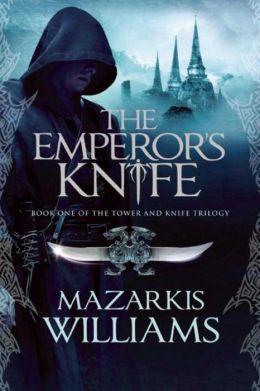 Mazarkis Williams' The Emperor's Knife sets up some intriguing situations, with interesting characters, against some fairly standard fantasy backgrounds: A decadent empire where the royalty have little connection or empathy with common citizens, a Mongol-ish society of plains-dwelling horsemen, a barren desert complete with buried cities.
When young Prince Sarmin's father dies, his oldest brother Beyon becomes the new Cerani Emperor. To prevent possible power struggles or revolt, all other siblings, even the youngest infant, are slain by Eyul, an assassin tasked with being the Emperor's Knife, the only person able to slay those of royal blood without damnation. But Sarmin survives, secretly kept in a tower room for nearly twenty years as a last-resort backup if Beyon fathers no new heir.
The empire is also troubled by a strange plague, the Pattern, where geometric marks appear on victims' skins, eventually driving them to agonizing death or into violent madness. And the marks have begun to appear on the Emperor's own skin. Court intrigues from several different directions ensue. A young woman from the plains is negotiated to marry into the Empire, to be Sarmin's bride, causing further complications. The woman, Mesema, has her own secret; she can sometimes see the Pattern in the movements of grass in the wind or shifting desert sands.
Multiple characters in multiple locations sometimes make it slightly difficult to keep track of all the plot threads from chapter to chapter. (Perhaps that should be called Game-Of-Thrones Syndrome?) I sometimes had to pause at a chapter's beginning to remind myself of who this chapter's main characters were, and what their situation had been in earlier chapters. But well-written enough to keep wanting to know what happened next. Overall a satisfying read.
I read Emperor's Knife free as one of Barnes & Noble's Free NOOK Fridays offerings. Current price: Barnes & Noble Nook $9.99, Amazon Kindle $11.06.
- - - - -
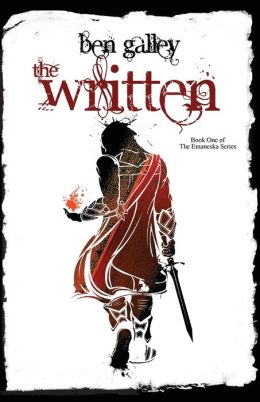 Ben Galley's The Written is graced by a spectacularly striking cover. Rather than trying to dummy up a cover himself, as a lot of self-published writers do, he went to a crowdsourcing site, Crowdspring, where he was able to offer a precis of his book and have a number of designers submit book cover proposals. The one he accepted, by designer Mikael Westman and artist Claudia West, really stands out from the crowd of self-published books and would be no surprise coming from any leading publisher. For $200, Ben Galley got more than his money's worth, and he's used the same team to do the covers for further books in this fantasy series; I believe that's called "branding". Smart move on Ben's part.
Unfortunately, the cover is the best thing about the book. The MacGuffin of the novel is yet another Evil Book of Evil Evilness. (See my review of the film Equinox.) The protagonist is yet another bad-ass warrior-mage. The background is yet another generic fantasy landscape, with dragons, AND vampires, AND werewolves.
Other writers have all done that before, and better. Much better. The characters, even the main character, feel stereotyped and flat; their personalities seem painted on, rather than arising from inside. One thing I noticed about Galley's writing is that he tends to over-write his scenes. A character comes into a room. He walks over here. He walks over there. He picks something up. He puts something down. He sits down. He stands up again. Et bloody cetera. Very little of which advances the plot or reveals character. My fingers kept itching for a red pencil as I read the first few chapters.
Full disclosure: I didn't get beyond the first three chapters. I looked at some of the reviews on Goodreads, and a lot of people gave high praise to the book. (Rule of thumb for ratings on Goodreads: Deduct at least one star to adjust for irrational exuberance.) I might have liked the book better, and possibly kept on reading, if I was forty or fifty years younger and hadn't, essentially, read books just like it a hundred times before. For some people, it might be fresh and interesting material; to me, it's just stale.
Read free as author's promotion. Current prices: $3.99 Amazon Kindle
- - - - -
 Sam Torode's The Dirty Parts of the Bible - A Novel was my favorite of the three books.
 Like The Written, TDPOTB has a very professional cover. Torode has an advantage in that regard; he's a professional book designer in his normal life. This even carries over to the interior design, with an old-etching-style illo at the head of each chapter. He also uses red-colored text on occasion, but I didn't feel it added anything that italics wouldn't have done just as well.
Tobias is the son of a preacher in 1930's Michigan, caught between the demands of a strict father and the raging hormones of young adulthood. When his father loses his church and is blinded in a freak accident, it's up to Tobias to return to estranged family in Texas and recover a hidden stash of cash his father had concealed on a brother's farm before moving the family to Michigan.
Things get complicated when Tobias loses all his travelling money in his first-ever encounter with a prostitute. Tobias ends up travelling by rail with Craw, a black hobo and loquacious dispenser of dubious wisdom.
Adventures ensue. Tobias learns some lessons from the school of (literally) hard knocks, and falls for a young woman whose last three boyfriends all died, reputedly because of an Indian curse.
The book is breezy and easy and fast-moving. It's a picaresque bildungsroman set in 1930's small-town America and the rail-riding hobo subculture. It's fun and funny. Tobias is the narator of the story, and his "voice" is wonderful. Some reviewers complained the ending came too quickly. I felt a bit that way myself, but mostly because I wanted to read more about Tobias and Craw.
(Note: The book is inspired by the Biblical story of Tobias and the Angel.)
Read free as author's promotion. Current prices: $2.99 Amazon Kindle
5/21/2013
Tribal Gathering

Last Sunday, Hilde and I spent the afternoon at the Phoenix Tribal Gathering, a rather small event mixing Pagan, New Age and Celtic enthusiasms, held at the Irish Cultural Center near downtown Phoenix.
 |
| Hance Park lightpost |
The ICC is a nice looking building, even if it's not an authentic stone building; the stone facing (which is probably fauxstone) is a passable imitiation. It would probably look more authentic in overcast weather with a light drizzle. Get some ivy growing up the walls, even better.
 |
| Burton Barr Library |
(I guess the reward for spending one's life as a political hack is to have a park or public building named after you. Meh.)
We have quite a few contacts in Pagan, etc., circles, so we caught up with some friends, browsed the crafts contest entries, listened to a little music, and browsed the various vender booths. One booth was not only offering massages, they had a new puppy with them. Massage therapy and pet therapy in one! (I took advantage, since my shoulder was starting to ache by that point in the day.)
I also had a Tarot reading done. I'm a pretty thorough skeptic, but Hilde's more open to that sort of thing and urged me to have the reading done. Very interesting results. I don't believe in Tarot as prediction or prescription, but I think they can help trigger lines of thought that may help reach decisions that had been treading water before. So the results seem to have helped firm up some decisions I'd already been considering, about how to deal with the consequences of breaking my arm last December. It's a pretty distant possibility that I'll go back to the status quo I had before the accident, so I need to figure out in what direction I want to go and try to take steps toward those goals. I'll probably say more about that in another post.
But it was good to get out of the house for a little while and not have it just be for a doctor's appointment.
5/18/2013
Fragments -- BLAZE O'GLORY
I've been cleaning out my office, and came across a stack of old papers and notes with notes and ideas for and fragments of old stories or movie scripts.
I've mentioned that when I was trying to sell movie scripts in the early 1990's, several actual scripts were "dumbed down" stories that went nowhere when I tried to market them. Those were the script ideas good enough to actually write. I had more that never got beyond rough notes or outlines.
This, I think, is the worst of those.
High Concept: Showgirls meet Indiana Jones
Since I didn't go on to turn these notes into an actual script, maybe I did have enough self-respect to not sink that low.
Besides, there's probably a real stripper somewhere named Blaze O'Glory.
(A quick Google search reveals a 1930 movie already had the title BLAZE O'GLORY. A soldier is placed on trial for murder, interspersed with song and dance numbers. I'm not making that last part up. However, the author of the original short story -- "The Long Shot" -- that the movie was based on, Thomas Boyd, appears to have been pretty interesting. I may see if I can get some of his books thru InterLibrary Loan.)
I've mentioned that when I was trying to sell movie scripts in the early 1990's, several actual scripts were "dumbed down" stories that went nowhere when I tried to market them. Those were the script ideas good enough to actually write. I had more that never got beyond rough notes or outlines.
This, I think, is the worst of those.
BLAZE O'GLORY
High Concept: Showgirls meet Indiana Jones
- Stripper/dancer Blaze O'Glory becomes privy to vital info.
- The Hero-figure, government agent, arrives, bonds with Blaze, succumbs to surprise attack by gunmen; it's up to Blaze to get the info to safety (with a Yoda-type character).
- Bad guys in pursuit; skin-of-teeth escapes.
- Blaze finds out what the info is: widescale corruption in government, including Hero's own agency; turning over info to hero's agency will only see info used for blackmail/influence. (Does Hero know this?)
- Blaze is now marked for death; she's also pissed off.
- Blaze loses closest friend to killers; even more pissed off. More chases and escapes.
- Blaze takes info to "radical" alternative paper, but the editor is a burnt-out sell-out, sells info back to government and gives them Blaze's location.
- Showdown with armed agents; Blaze under siege.
- Hero brought from hospital to talk her out -- where are his loyalties?
- Blaze "dies" in final conflagration; info destroyed, no one wins; crippled Hero sent to desk job.
- Finale -- corridor of agency, 2 years later -- Hero sees girl who looks/doesn't look like Blaze -- hair color, glasses, breast reduction? -- turn her in or not? finally gives her leeway -- last scene as she hacks into agency files.
Since I didn't go on to turn these notes into an actual script, maybe I did have enough self-respect to not sink that low.
Besides, there's probably a real stripper somewhere named Blaze O'Glory.
(A quick Google search reveals a 1930 movie already had the title BLAZE O'GLORY. A soldier is placed on trial for murder, interspersed with song and dance numbers. I'm not making that last part up. However, the author of the original short story -- "The Long Shot" -- that the movie was based on, Thomas Boyd, appears to have been pretty interesting. I may see if I can get some of his books thru InterLibrary Loan.)
5/11/2013
Blue Mondays
The TNT network has cancelled Monday Mornings, its David E. Kelley-produced medical drama.
I'm sad. Monday Mornings was, like a lot of Kelley's shows, quirky and funny and dramatic. (Sometimes over-dramatic.) And it had both Alfred Molina and Ving Rhames starring in it! How could it possibly fail?

Maybe because TNT only greenlighted a puny six episodes. I remember when the minimum order for a tv show would be thirteen episodes. It never built enough of a following because TNT didn't give it time to build a following. If you give a show a short season, you have to promote it heavily. TNT didn't do that either. The show was sort of like a meteor: It came, it glowed brilliantly for a few seconds, and then it was gone.
Hopefully even the half-a-sandwich season it had will show up on DVD or Netflix eventually. Give it a watch if you get a chance.
I'm sad. Monday Mornings was, like a lot of Kelley's shows, quirky and funny and dramatic. (Sometimes over-dramatic.) And it had both Alfred Molina and Ving Rhames starring in it! How could it possibly fail?

Maybe because TNT only greenlighted a puny six episodes. I remember when the minimum order for a tv show would be thirteen episodes. It never built enough of a following because TNT didn't give it time to build a following. If you give a show a short season, you have to promote it heavily. TNT didn't do that either. The show was sort of like a meteor: It came, it glowed brilliantly for a few seconds, and then it was gone.
Hopefully even the half-a-sandwich season it had will show up on DVD or Netflix eventually. Give it a watch if you get a chance.
5/10/2013
This & That -- Links, etc.
I'm going to try and make "This & That", briefly noting things of interest I've come across on the Net or elsewhere, a semi-regular feature here.
Solar Impulse, the completely-solar-powered plane attempting to cross the United States, landed in Phoenix at the end of the first leg of its trip. This is cool, even if I couldn't help noting to Hilde that a hundred and ten years ago the Wright brothers leading-edge flying machine looked like something that might come apart in a strong wind, and the leading-edge of aviation technology today still looks like something that might come apart in a strong wind.
I stumbled across a book-review/book-commentary blog with a difference: Notes To My Muses, by mystery author Jane Isenberg. For her 70th birthday several years ago, Jane decided to start a blog of love letters to some of her favorite authors. Witty, chatty, and perceptive. Except for Michael Chabon's alternate-history The Yiddish Policemens' Union and one or two others, not much in the sf/fantasy line; most of the works she writes about are literary or mystery works. (Another Travis McGee fan, yay!) I loved her opening remark to John Updike: "I first encountered your work in The New Yorker in the early Sixties, but I got married anyway."
 In a less positive light, B&N's Nook Apps is offering a "game" called PUNCH A NERD! The object is to "Punch-A-Nerd! Have some fun, punch a nerd and see how far he flies! This light hearted game is FREE and is a fun way to pass the time." As a long-time nerd whose old school days occasionally featured being punched for, well, being a nerd, that doesn't sound like much fun to me. (And a Google search reveals there are multiple "Punch A Nerd" games available from different developers. Wait a minute, aren't programmers supposed to be nerds themselves? Thanks a lot, you traitors!)
From 2011, Allan Guthrie's Ten Rules To Write Noir.
Texas Library Will Have No Books. Cue "Illiterate Texans" joke in three, two, one.... The article says the all-electronic library will look something like an Apple Store. God, I hope not. The glass-and-steel-cube style of Apple Stores is cold and offputting. (I used to do security in an upscale office/shopping development that featured an Apple store. I have stories....) A traditional library is more than just checking books in and out; I wonder if there'll be actual librarians on site to assist the public with research and questions?
 |
| (photo from townhall.com) |
I stumbled across a book-review/book-commentary blog with a difference: Notes To My Muses, by mystery author Jane Isenberg. For her 70th birthday several years ago, Jane decided to start a blog of love letters to some of her favorite authors. Witty, chatty, and perceptive. Except for Michael Chabon's alternate-history The Yiddish Policemens' Union and one or two others, not much in the sf/fantasy line; most of the works she writes about are literary or mystery works. (Another Travis McGee fan, yay!) I loved her opening remark to John Updike: "I first encountered your work in The New Yorker in the early Sixties, but I got married anyway."
 In a less positive light, B&N's Nook Apps is offering a "game" called PUNCH A NERD! The object is to "Punch-A-Nerd! Have some fun, punch a nerd and see how far he flies! This light hearted game is FREE and is a fun way to pass the time." As a long-time nerd whose old school days occasionally featured being punched for, well, being a nerd, that doesn't sound like much fun to me. (And a Google search reveals there are multiple "Punch A Nerd" games available from different developers. Wait a minute, aren't programmers supposed to be nerds themselves? Thanks a lot, you traitors!)
From 2011, Allan Guthrie's Ten Rules To Write Noir.
Texas Library Will Have No Books. Cue "Illiterate Texans" joke in three, two, one.... The article says the all-electronic library will look something like an Apple Store. God, I hope not. The glass-and-steel-cube style of Apple Stores is cold and offputting. (I used to do security in an upscale office/shopping development that featured an Apple store. I have stories....) A traditional library is more than just checking books in and out; I wonder if there'll be actual librarians on site to assist the public with research and questions?
5/09/2013
Word of the Day: Scomm
I've learned a new word: "Scomm". The traditional meaning is "buffoon", which would be useful, but that's not where I saw it, or how it seemed to be used. Over on Yahoo! News, an article on how the dead Boston terrorist's body is still sitting in a funeral home's chiller, unable to find a cemetery willing to accept and bury him, has been producing some of the most vicious and ugly comments I've ever seen. Considering that "ugly" tends to be the default mode for Yahoo! commenters, that's saying something. Essentially, it's a post-mortem lynch mob there. I posted a comment that this behavior was unseemly and un-American. One reply included the remark "Scomm goes back to scomland."
If the guy replying to me was actually using that in the obscure meaning of "buffoon", I don't think that was accurate. "Buffoon" is not how I would describe someone who killed multiple people, maimed and wounded dozens of others, engaged police in intrense firefights in public streets, managed to get an entire city to shut down for 24 hours (at an estimated minimum economic cost of a quarter-billion dollars), and triggered a national spasm of the ugliest side of Ugly-Americanism since 9/11 (that he's been able to continue even after his death). I would not call that guy a buffoon; I would call him a Very Successful Terrorist.
My responder might have simply been misspelling "scum", rather than using an obscure word. He didn't know how to spell "Christian" properly, either. (Somewhere, some poor guy named Christien is having the nagging feeling that people are saying nasty remarks about him on the Internet.)
But "scomm", that's a useful word. I'll remember it.
If the guy replying to me was actually using that in the obscure meaning of "buffoon", I don't think that was accurate. "Buffoon" is not how I would describe someone who killed multiple people, maimed and wounded dozens of others, engaged police in intrense firefights in public streets, managed to get an entire city to shut down for 24 hours (at an estimated minimum economic cost of a quarter-billion dollars), and triggered a national spasm of the ugliest side of Ugly-Americanism since 9/11 (that he's been able to continue even after his death). I would not call that guy a buffoon; I would call him a Very Successful Terrorist.
My responder might have simply been misspelling "scum", rather than using an obscure word. He didn't know how to spell "Christian" properly, either. (Somewhere, some poor guy named Christien is having the nagging feeling that people are saying nasty remarks about him on the Internet.)
But "scomm", that's a useful word. I'll remember it.
5/08/2013
My Grumpy Afternoon
Hilde and I went to Best Buy yesterday afternoon. Best Buy is one of those stores that keep showing up on lists of "Major Chains That Will Probably Go Out of Business Soon." I used to shop there fairly often, but their selection isn't as good as it used to be and their customer service likewise has gone downhill.
But we needed to go there, because we were shopping for an e-reader, specifically an Amazon Kindle.
I don't like to shop with Amazon. I don't like their predatory business practices or their monopolistic aspirations. I don't like that they saddled the Kindle with a proprietary format. But we're trying to find an ebook reader that Hilde can use and the Kindle appeared to be the only one on the market with a "Voice Command" capability.
Hilde's had severe rheumatoid arthritis for forty-five years. Besides the damage to the rest of her body; her hands and fingers have grown twisted and weak. On top of that, over the last ten or so years she's developed a bad "essential tremor" in her hands and forearms, a shaking that can get so extreme I've seen her shake a soda straw out of a water bottle. She has, on a good day, maybe 5% of a normal person's use of her hands. She can't use a keyboard, or a touch pad, or a mouse. (Ever wondered why I show up on the Internet so much, but she doesn't at all? That's why.)
She's able to turn pages in a book, sometimes using the edge of her palm, but even that's growing more difficult for her.
Eventually, Hilde won't even be able to turn pages in a book by herself. So we've been trying to find if there's an e-reader on the market that will turn pages and other tasks by voice commands. And the Kindle seemed to be the only one with any kind of "Voice Command" listed as a feature.
But I couldn't find much actual information online about the Kindle's Voice Command, so I wanted to try it out before we spent the money on it. And Best Buy appeared to be the only place where one could actually handle and try out a Kindle before buying.
I'd come across some online accounts of people who'd gone to Best Buy back around 2011 to do a hands-on with the Kindles there, only to find that the display models were all locked in demonstration mode, with only limited functions available. Since that's friggin' stupid, I figured Best Buy might have freed up the Kindles' functions by now. So I called up the closest Best Buy and asked.
"Are your Kindles locked in demonstration mode?"
"No, they're not."
You know how this story's going to end, don't you? Not quite yet, though. Because when we went to the closest Best Buy, their wi-fi network wasn't working. (An electronics store that can't keep a wi-fi network up and operating. Ponder that thought for a moment.) And they said the Kindle needed wi-fi to use the Voice Commands.
Wait, what? There aren't any printed circuits between the microphone and the processor chip? It has to broadcast your voice an entire inch or two to the rest of the machine?
Years ago, I came up with Geek Rule #1: Whatever can be done with a computer, must be done with a computer. I think the 2013 version may be: Whatever can be done via wi-fi, must be done via wi-fi.
So, no Kindle try-out there. Back in the car and off to the second closest Best Buy. And of course you know what we were told there:
"All our Kindles are locked in demonstration mode, so we can't show you that feature."
That was a waste of about an hour and a half and a gallon of gas. Frustrating.
If a customer calls with a question you don't know the answer to, answering "I don't know" is acceptable customer service. Answering "I don't know, may I put you on hold while I get someone who does?" is even more acceptable. Making Shit Up off the top of your head is NOT acceptable customer service.
No wonder Best Buy is going down the tubes. I'd thought about shopping there for a new keyboard after looking at the Kindle, but after hearing the Kindle's were locked in demo after all, we left without looking at anything else.
To top it off, after getting home, I did some more searching online and finally found a better description of what the Kindle's Voice Commands actually does: It takes the command options off various menus and reads them out loud to you. It's actually an accessibility feature for visually-impaired or blind users, not for people with impaired dexterity or unable to use their hands at all.
So there don't seem to be any hands-free options available for e-readers. I find that not only frustrating, but perplexing. I can tell my smartphone to make a phone call; I can tell it to make a Google search. But I can't tell my e-book apps to "Turn Page" or "Go Back" or "Go To [page ___, or Chapter ___ ]". The closest thing I found was an app for people with reading-comprehension problems that highlights a few lines at a time and moves the highlighted area slowly down the pages; but that's still not voice-operated, you just start it with a button push and stop it with another.
I would think there'd be a market for a hands-free e-reader, and not just for people with disabilities. Cookbooks, craft instructions (knitting patterns?), car repair manuals, other activities where your hands are in use and/or greasy or soiled; a hands-free option would be great for those kinds of books.
What? "There's always Dragon," I hear someone saying. The only online article I could find about trying to do that with a Kindle is this one from all the way back in 2009, and it still requires being able to use the mouse a lot. I couldn't find anything that said you could use Dragon with a Nook, and several spots that said you couldn't. And Hilde's tried to use Dragon before, and found the learning curve dreadfully frustrating and steep. (She may give it another try, after some dental implants are completed at the end of this month and her regular speaking mannerisms are back.)
In the meantime, it looks like we wait until someone comes out with an actual hands-free reader. *grump*
But we needed to go there, because we were shopping for an e-reader, specifically an Amazon Kindle.
I don't like to shop with Amazon. I don't like their predatory business practices or their monopolistic aspirations. I don't like that they saddled the Kindle with a proprietary format. But we're trying to find an ebook reader that Hilde can use and the Kindle appeared to be the only one on the market with a "Voice Command" capability.
Hilde's had severe rheumatoid arthritis for forty-five years. Besides the damage to the rest of her body; her hands and fingers have grown twisted and weak. On top of that, over the last ten or so years she's developed a bad "essential tremor" in her hands and forearms, a shaking that can get so extreme I've seen her shake a soda straw out of a water bottle. She has, on a good day, maybe 5% of a normal person's use of her hands. She can't use a keyboard, or a touch pad, or a mouse. (Ever wondered why I show up on the Internet so much, but she doesn't at all? That's why.)
She's able to turn pages in a book, sometimes using the edge of her palm, but even that's growing more difficult for her.
Eventually, Hilde won't even be able to turn pages in a book by herself. So we've been trying to find if there's an e-reader on the market that will turn pages and other tasks by voice commands. And the Kindle seemed to be the only one with any kind of "Voice Command" listed as a feature.
But I couldn't find much actual information online about the Kindle's Voice Command, so I wanted to try it out before we spent the money on it. And Best Buy appeared to be the only place where one could actually handle and try out a Kindle before buying.
I'd come across some online accounts of people who'd gone to Best Buy back around 2011 to do a hands-on with the Kindles there, only to find that the display models were all locked in demonstration mode, with only limited functions available. Since that's friggin' stupid, I figured Best Buy might have freed up the Kindles' functions by now. So I called up the closest Best Buy and asked.
"Are your Kindles locked in demonstration mode?"
"No, they're not."
You know how this story's going to end, don't you? Not quite yet, though. Because when we went to the closest Best Buy, their wi-fi network wasn't working. (An electronics store that can't keep a wi-fi network up and operating. Ponder that thought for a moment.) And they said the Kindle needed wi-fi to use the Voice Commands.
Wait, what? There aren't any printed circuits between the microphone and the processor chip? It has to broadcast your voice an entire inch or two to the rest of the machine?
Years ago, I came up with Geek Rule #1: Whatever can be done with a computer, must be done with a computer. I think the 2013 version may be: Whatever can be done via wi-fi, must be done via wi-fi.
So, no Kindle try-out there. Back in the car and off to the second closest Best Buy. And of course you know what we were told there:
"All our Kindles are locked in demonstration mode, so we can't show you that feature."
That was a waste of about an hour and a half and a gallon of gas. Frustrating.
If a customer calls with a question you don't know the answer to, answering "I don't know" is acceptable customer service. Answering "I don't know, may I put you on hold while I get someone who does?" is even more acceptable. Making Shit Up off the top of your head is NOT acceptable customer service.
No wonder Best Buy is going down the tubes. I'd thought about shopping there for a new keyboard after looking at the Kindle, but after hearing the Kindle's were locked in demo after all, we left without looking at anything else.
To top it off, after getting home, I did some more searching online and finally found a better description of what the Kindle's Voice Commands actually does: It takes the command options off various menus and reads them out loud to you. It's actually an accessibility feature for visually-impaired or blind users, not for people with impaired dexterity or unable to use their hands at all.
So there don't seem to be any hands-free options available for e-readers. I find that not only frustrating, but perplexing. I can tell my smartphone to make a phone call; I can tell it to make a Google search. But I can't tell my e-book apps to "Turn Page" or "Go Back" or "Go To [page ___, or Chapter ___ ]". The closest thing I found was an app for people with reading-comprehension problems that highlights a few lines at a time and moves the highlighted area slowly down the pages; but that's still not voice-operated, you just start it with a button push and stop it with another.
I would think there'd be a market for a hands-free e-reader, and not just for people with disabilities. Cookbooks, craft instructions (knitting patterns?), car repair manuals, other activities where your hands are in use and/or greasy or soiled; a hands-free option would be great for those kinds of books.
What? "There's always Dragon," I hear someone saying. The only online article I could find about trying to do that with a Kindle is this one from all the way back in 2009, and it still requires being able to use the mouse a lot. I couldn't find anything that said you could use Dragon with a Nook, and several spots that said you couldn't. And Hilde's tried to use Dragon before, and found the learning curve dreadfully frustrating and steep. (She may give it another try, after some dental implants are completed at the end of this month and her regular speaking mannerisms are back.)
In the meantime, it looks like we wait until someone comes out with an actual hands-free reader. *grump*
5/03/2013
Old Stories
[long post warning]
As reported previously, I seem to have started writing fiction again -- completed fiction! -- in recent months, after a long dry spell since 2006. Besides wanting to send those new stories out to markets, I thought some of the old unsold stories might be worth trying again as well.
So I spent a couple of hours the other night consolidating all my old story manuscripts into one location. They were scattered over several old computers and a small stack of diskettes. They now reside on a key drive; I'll get the files copied over into my current computer, then copy again onto a second key drive that will go into the safe-deposit box at the bank. (Should I go to Google Docs and store them on the cloud as well? I'll think about that.)
Yeah, yeah, this is all stuff I should have done years ago.
I had a short period of distress when I couldn't find the diskette that contained the majority of the short stories. All I found was a diskette labelled with the title of one story, "The Spearsister". I thought I might end up having to retype almost everything into the computer. (Whenever I finish a story, I print out a hardcopy and put it in a file cabinet. I'm not totally irresponsible.)
But when I put that single diskette in the old drive, all the missing stories were included on it. *whew* (The one story that wasn't on that diskette? "The Spearsister")
I also found out that my 20-year-old old brick-shaped/brick-weight Mitac laptop (with a mind-boggling forty megabytes of memory! Whoo-hoo!), the machine I wrote a lot of my fiction and scripts on when I was more prolific, would no longer power up. (It still turned on as of a few years ago.) Anyone need a doorstop?
Speaking of scripts: After selling the "Clues" script to ST:TNG in 1990, I tried to follow up on that success by writing and trying to sell movie scripts. (Why not try for a television career? Because it's almost mandatory to live in the LA area if you're a TV writer; giving up the security-- and health insurance-- of my Postal Service job and jumping naked into the shark-infested waters of freelance scriptwriting was too big a risk, even if Hilde had been willing-- she wasn't-- to live in LA. It's possible, if rather more difficult, to try and sell movie scripts from a non-LA location, while still keeping your day job.)
[more below the break: Writing movie scripts; a sad, mad, bad Postal Service story; Wesley Crusher Gets Horny; and a little bit more]
As reported previously, I seem to have started writing fiction again -- completed fiction! -- in recent months, after a long dry spell since 2006. Besides wanting to send those new stories out to markets, I thought some of the old unsold stories might be worth trying again as well.
So I spent a couple of hours the other night consolidating all my old story manuscripts into one location. They were scattered over several old computers and a small stack of diskettes. They now reside on a key drive; I'll get the files copied over into my current computer, then copy again onto a second key drive that will go into the safe-deposit box at the bank. (Should I go to Google Docs and store them on the cloud as well? I'll think about that.)
Yeah, yeah, this is all stuff I should have done years ago.
I had a short period of distress when I couldn't find the diskette that contained the majority of the short stories. All I found was a diskette labelled with the title of one story, "The Spearsister". I thought I might end up having to retype almost everything into the computer. (Whenever I finish a story, I print out a hardcopy and put it in a file cabinet. I'm not totally irresponsible.)
But when I put that single diskette in the old drive, all the missing stories were included on it. *whew* (The one story that wasn't on that diskette? "The Spearsister")
 |
| Ye Olde Mitac, RIP |
Speaking of scripts: After selling the "Clues" script to ST:TNG in 1990, I tried to follow up on that success by writing and trying to sell movie scripts. (Why not try for a television career? Because it's almost mandatory to live in the LA area if you're a TV writer; giving up the security-- and health insurance-- of my Postal Service job and jumping naked into the shark-infested waters of freelance scriptwriting was too big a risk, even if Hilde had been willing-- she wasn't-- to live in LA. It's possible, if rather more difficult, to try and sell movie scripts from a non-LA location, while still keeping your day job.)
[more below the break: Writing movie scripts; a sad, mad, bad Postal Service story; Wesley Crusher Gets Horny; and a little bit more]
4/28/2013


4/27/2013
The Arm: A Brief Update
As expected, the insurance company providing Workmen's Comp coverage for my employer wanted a second opinion before agreeing to new surgery and a revision of the original shoulder arthroplasty from December. So I'm scheduled for an "independent medical examination" on May 8th. The doctor they're sending me to seems well qualified; he does a lot of knee and shoulder repairs for professional and collegiate sports teams here.
Still having problems, sometimes significant problems, with pain and stiffness in the right arm. I move the arm slowly and carefully, because quick or abrupt movements make the chronic deep ache turn into sharp bolts of pain.
I don't like taking narcotics, and so far I've managed to get by with doses of Tylenol and Alleve and an occasional Celebrex. But I'm taking more OTC analgesics, more often, than I ever have before, and that comes with its own cautions. (Watch those kidneys!)
At this point, as inconvenient and unpleasant as additonal surgery might be, it looks like the best course of action. Because living like this isn't a long-term option. This is a drag.
Still having problems, sometimes significant problems, with pain and stiffness in the right arm. I move the arm slowly and carefully, because quick or abrupt movements make the chronic deep ache turn into sharp bolts of pain.
I don't like taking narcotics, and so far I've managed to get by with doses of Tylenol and Alleve and an occasional Celebrex. But I'm taking more OTC analgesics, more often, than I ever have before, and that comes with its own cautions. (Watch those kidneys!)
At this point, as inconvenient and unpleasant as additonal surgery might be, it looks like the best course of action. Because living like this isn't a long-term option. This is a drag.
 |
| Yeah, "like something the cat dragged in." Exactly. |
So Lafferty, Vonnegut, and van Vogt Walk Into A Bar...
Completed a new short story last night, about 4700 words. That's three stories in four months; I'm pretty sure that's a record for me.
Title is "Julius Jeremiah and The Time Machinist", and it's spun off this old fragment of writing I posted about back in January. I think of it as "R.A. Lafferty meets Kurt Vonnegut meets A.E. van Vogt meet the Marx Brothers." It's a little on the weird side. Just a little.
Let it stew for a few days before re-reading and revisions.
Last week I started going to a monthly writers group that meets at the local library. I'm not certain if I should submit this particular story there. Hard to tell from one meeting, but I may be the only person in the group who writes sf/fantasy. That doesn't always work out well. Science fiction on a more than Star Trek level sometimes requires at least a passing familiarity with the tropes and memes of the genre's past, otherwise it can just be confusing.
(My mother rarely read science fiction, and generally considered it, oh, trash. She told me once, in my late teens, that she'd tried reading one of the books off my bedroom shelf to see if she could figure out why science fiction appealed to me so much. She said she could not make heads or tails out of the book, she could not figure out what was going on, that it utterly confused her. Thinking she might have gotten hold of something like Brian Aldiss' Barefoot In The Head, I asked what the title or author had been. "I don't remember," she told me. "but it had a spaceship on the cover." That sure narrowed it down; I'm still not sure what she tried to read. But Mom didn't know the 'language' of sf, and I think that's a major reason why she might have found it perplexing.)
Title is "Julius Jeremiah and The Time Machinist", and it's spun off this old fragment of writing I posted about back in January. I think of it as "R.A. Lafferty meets Kurt Vonnegut meets A.E. van Vogt meet the Marx Brothers." It's a little on the weird side. Just a little.
Let it stew for a few days before re-reading and revisions.
Last week I started going to a monthly writers group that meets at the local library. I'm not certain if I should submit this particular story there. Hard to tell from one meeting, but I may be the only person in the group who writes sf/fantasy. That doesn't always work out well. Science fiction on a more than Star Trek level sometimes requires at least a passing familiarity with the tropes and memes of the genre's past, otherwise it can just be confusing.
(My mother rarely read science fiction, and generally considered it, oh, trash. She told me once, in my late teens, that she'd tried reading one of the books off my bedroom shelf to see if she could figure out why science fiction appealed to me so much. She said she could not make heads or tails out of the book, she could not figure out what was going on, that it utterly confused her. Thinking she might have gotten hold of something like Brian Aldiss' Barefoot In The Head, I asked what the title or author had been. "I don't remember," she told me. "but it had a spaceship on the cover." That sure narrowed it down; I'm still not sure what she tried to read. But Mom didn't know the 'language' of sf, and I think that's a major reason why she might have found it perplexing.)
4/26/2013
The Brave Free Books
I've been checking out a few e-books offered for free online. One of the popular marketing techniques for getting people to read and talk about your e-book is to offer it for free for a period of time. In the case of self-published e-books, this usually seems to be for several months, followed by a low price ($2.99 seems to be the most popular price point, or $0.99 if the work isn't a full novel) being attached. Ideally, the free copies downloaded create word-of-mouth that brings people in to actually buy copies after the free period expires. (And some self-publishers just want people to read their work, so they keep their work available for free.)
Some traditional publishers also offer particular books either heavily discounted for a short promotional period, or actually free. The latter mostly seem to be for the first volume in a series, offered briefly when a later volume is just coming onto the market.
One place I've found for those offers is Barnes & Noble's "Free Fridays" . Every Friday, a free book is available for download to a Nook e-reader or Nook app for a week. Categories vary from week to week: epic fantasy, romance, urban fantasy, mainstream lit, suspense, inspirational, etc. So it's a bit of a potluck, but I've downloaded a few Nook books from the Free Friday offerings, and generally find them worth reading.
Well . . . not always.
 EVERYBODY'S DAUGHTER by Michael John Sullivan is a Christian time travel fantasy, wherein a troubled father travels back in time to Jerusalem about the time of Jesus' arrival and subsequent crucifixion. He's followed by his teenage daughter, but the daughter arrives at a different time, when her father is nowhere to be found. (This is not their first trip back to Jerusalem. In an earlier book, Necessary Heartbreak, they apparently went back together and met Judas Iscariot, among others; the father still carries some of Judas' silver in his pocket from that earlier trip.)
The book unfortunately opens with a howler of a first sentence: "Jingling the silver coins between his fingers that he had retrieved so many centuries ago[...]". The writing, on a sentence level, gets better after that, but I had trouble with the characterization and plotting of the book. The characters seemed inconsistent, especially some of the secondary characters. Ideally, plot flows naturally from characters' actions as they react to the events around them. I got the impression that Sullivan had plot points planned, and he forced his characters to move towards those plot points whether they wanted to or not.
The big choking point came with trying to figure out just when the father and daughter had made their separate arrivals in Jerusalem. For most of the book, it appeared that they had arrived at least months apart. I also wondered if the father and daughter's presence might have created two separate timelines. But if the last few chapters Sullivan seems to be saying they were not only in the same timeline, but only a few days apart. My suspension of disbelief was blown out the window.
(Sullivan's portrayal of Jesus is also a very "Godly", Sunday-school version. When I read portrayals of Jesus, I always prefer they be more human, with smelly armpits, dirty feet, and flashes of temper and despair.)
I wanted to like the book. I didn't.
(Since the Free Friday offering, the price on the ebook has gone back to $3.47)
From the general free listings at B&N, I also tried one of the "always-free" books:
 KILL-BASA: NEW FLAVORS IN ZOMBIE HORROR by Sean Graham is a collection of five zombie stories. Most are very pulpish, with slam-bang non-stop action. "Dummies" gives a more traditional, non-Romero style zombie story. "Lee's Decision" has Robert E. Lee making a Faustian bargain to win the Civil War. But neither story impressed me, despite the attempt to put a twist on the idea of zombies.
The one story that did impress me, a bit, was "Ten Count". It was a Romero-style zombie story, a meme that's getting really stale. But it impressed me because the characters in it weren't cartoons or cardboard, which was where the other stories mostly failed. But it needed polish, it needed still more depth to the characters. It impressed me because it had potential, but it also disappointed because it could have been harder-hitting, even moving, with a bit more work and development.
Sean Graham's had a number of other short stories published in small press venues. I'd like to see him get a little more experience and practice before I try his work again.
I've got a few more of the Free Friday offerings and a couple of other free books sitting in the Nook app on my smartphone. I may make "The Brave Free Books" a semi-regular feature here.
Some traditional publishers also offer particular books either heavily discounted for a short promotional period, or actually free. The latter mostly seem to be for the first volume in a series, offered briefly when a later volume is just coming onto the market.
One place I've found for those offers is Barnes & Noble's "Free Fridays" . Every Friday, a free book is available for download to a Nook e-reader or Nook app for a week. Categories vary from week to week: epic fantasy, romance, urban fantasy, mainstream lit, suspense, inspirational, etc. So it's a bit of a potluck, but I've downloaded a few Nook books from the Free Friday offerings, and generally find them worth reading.
Well . . . not always.
 EVERYBODY'S DAUGHTER by Michael John Sullivan is a Christian time travel fantasy, wherein a troubled father travels back in time to Jerusalem about the time of Jesus' arrival and subsequent crucifixion. He's followed by his teenage daughter, but the daughter arrives at a different time, when her father is nowhere to be found. (This is not their first trip back to Jerusalem. In an earlier book, Necessary Heartbreak, they apparently went back together and met Judas Iscariot, among others; the father still carries some of Judas' silver in his pocket from that earlier trip.)
The book unfortunately opens with a howler of a first sentence: "Jingling the silver coins between his fingers that he had retrieved so many centuries ago[...]". The writing, on a sentence level, gets better after that, but I had trouble with the characterization and plotting of the book. The characters seemed inconsistent, especially some of the secondary characters. Ideally, plot flows naturally from characters' actions as they react to the events around them. I got the impression that Sullivan had plot points planned, and he forced his characters to move towards those plot points whether they wanted to or not.
The big choking point came with trying to figure out just when the father and daughter had made their separate arrivals in Jerusalem. For most of the book, it appeared that they had arrived at least months apart. I also wondered if the father and daughter's presence might have created two separate timelines. But if the last few chapters Sullivan seems to be saying they were not only in the same timeline, but only a few days apart. My suspension of disbelief was blown out the window.
(Sullivan's portrayal of Jesus is also a very "Godly", Sunday-school version. When I read portrayals of Jesus, I always prefer they be more human, with smelly armpits, dirty feet, and flashes of temper and despair.)
I wanted to like the book. I didn't.
(Since the Free Friday offering, the price on the ebook has gone back to $3.47)
From the general free listings at B&N, I also tried one of the "always-free" books:
KILL-BASA: NEW FLAVORS IN ZOMBIE HORROR by Sean Graham is a collection of five zombie stories. Most are very pulpish, with slam-bang non-stop action. "Dummies" gives a more traditional, non-Romero style zombie story. "Lee's Decision" has Robert E. Lee making a Faustian bargain to win the Civil War. But neither story impressed me, despite the attempt to put a twist on the idea of zombies.The one story that did impress me, a bit, was "Ten Count". It was a Romero-style zombie story, a meme that's getting really stale. But it impressed me because the characters in it weren't cartoons or cardboard, which was where the other stories mostly failed. But it needed polish, it needed still more depth to the characters. It impressed me because it had potential, but it also disappointed because it could have been harder-hitting, even moving, with a bit more work and development.
Sean Graham's had a number of other short stories published in small press venues. I'd like to see him get a little more experience and practice before I try his work again.
I've got a few more of the Free Friday offerings and a couple of other free books sitting in the Nook app on my smartphone. I may make "The Brave Free Books" a semi-regular feature here.
Subscribe to:
Posts (Atom)