Showing posts with label e-books. Show all posts

1/01/2014

My Year In 2013

And why not add my own gobbet of spit to the year's-end tsunami of "Best of" lists and retrospectives for 2013?

2013, the Good, the Bad, and the Ugly:

Start with the Bad:  The biggie for the year was recovering, such as it was, from the bad arm break and shoulder injury from December 2012.  I wrote a series of posts throughout the year (see all the "The Arm" posts here) detailing the various ups and downs on that front.  At year's end, I still have trouble and pain from that shoulder; if I don't remember to take a couple of hefty aspirin/Tylenol tablets several times a day, I notice.  Oh, how I notice.  (A small pillbox is now an obligatory part of my pants-pocket inventory, along with wallet and car keys.) 

Range of motion and strength for the arm are still significantly compromised.   I figure I can still do about 80% of what I used to without more than mild discomfort, then about another 10% involving stronger reaching and grabbing and lifting that I can do but have to work thru discomfort/pain to do so.  And then the last 10% beyond that, which the arm just plain Don't Do Dat Shit No More.

It is what it is.  I deal with it.  But sometimes I deal with it by feeling broken and fragile and old.

Which leads into the Ugly:  In 2013 I got yet another year older.   This happens every damn year.  What is up with that shit?  In a sensible universe, you'd be able to skip that whole aging schtick once in a while.  Somewhere, there's got to be a button you can click for a drop-down menu that includes "Stop Aging" or even "Get Younger" options.  I'm getting a little tired of looking in the mirror to see some grumpy-looking old guy with a receding hairline and advancing wrinklage looking back.

But, hey, let's end this post with something a little more upbeat, the Good:  2013 was the year when I started writing and marketing fiction again on a moderately regular basis, after falling out of the practice back around 2006.  Ironically, it was in large part because of the broken arm and subsequently being off work for months that I started up again.  I've found myself enjoying the process again, enough that I've tried to continue writing even since going back to work at the end of July.

Concurrent with starting to write fiction again, I seemed to enjoy reading more this last year.  I've delved into the explosion of self/indie-published books that have come out the past few years.  That experience has been mixed.  I've found a few gems, some pretty decent books, but also a large proportion of books that should have been worked over and rewritten more before publishing, and *sigh* a few that just made me cringe.

(The self-published work I enjoyed most this past year was THE DIRTY PARTS OF THE BIBLE by Sam Torode, a picaresque bildungsroman set in 1930's Hobo America with a slight supernatural element.  My own review here.)

Among works from traditional publishers, I found myself reading ebook versions, or listening to audiobooks, more than printed hardcovers or paperbacks.  Primarily this is because I have my smartphone within easy reach on my belt almost every waking moment; with several reading apps installed on the phone, I have access to a choice of books -- there are about 50-60 books downloaded to the phone at the moment, plus I can borrow library ebooks and audiobooks via the Overdrive app --  without having to carry around an additional bulkier object to read during free moments.  Convenience trumps physicality.

My favorite traditionally-published books this year was an older one from 2001, Pat Murphy's ADVENTURES IN TIME AND SPACE WITH MAX MERRIWELL.  It was fun to read.  This 2010 review by Tansy Rayner Roberts says pretty much everything I'd say in a review of my own.

And so ends 2013.


(I've mentioned it before, but Tatsuya Ishida's SINFEST
is one of my favorite webcomics, including the traditional year's-end sequence
\when Death goes on the hunt for Father Time.
Big archive, large cast of characters, long backstories,
and multiple plotlines, but worth the effort to get into.)

12/25/2013

Slow Words: Looking For Ebooks

(An earlier version of this post appeared as a comment on SF SIGNAL, where the question "How do you find good self-published ebooks?" was asked.)

I use my smartphone for reading ebooks, with apps for Nook and Kindle. I also use Overdrive to borrow ebooks from my local library. The smartphone screen is close enough to a paperback size that I don’t have trouble reading off it; other people find it difficult.

This is a habit I’ve only picked up in the last couple of years, but I find myself reading a lot more ebooks than hardcopy books nowadays.

Finding good self-published books: Sometimes a struggle. Easiest way is to keep an eye on experienced writers who are, more and more, bringing out their rights-reverted backlist as ebooks. (Walter Jon Williams, one of my favorite writers, has brought out most of his backlist as ebooks, including the non-sf nautical adventure novels from the start of his career.) You can catch up on a lot of older books this way, and the numbers are increasing.

Sorting thru new self-published works is a lot harder.

Ratings on Amazon and Goodreads are generally useless. Even the most awful books get mostly four or five stars. I think the psychology behind this is that giving three stars or less makes you a meanie, and people don’t want to be seen as a meanie.

Actual Amazon/Goodreads reviews are a little better, but not by much. Too many of the reviews fall into the same four-or-five-stars mental trap, and give gushing approval for writing that clearly doesn’t deserve it. I find it actually better to read the three-star reviews, when there are any; they tend to give a much more realistic idea what one can expect to find in a book.

There are a number of ongoing attempts to establish websites devoted to legitimate and intelligent reviews of self-published books, but none of them seem to have really gained a reputation or foothold yet.

My occasional column here, “The Brave Free Books”, reviews mostly-ebooks that I’ve gotten for free from author’s promotions, drawings, or other sources. I tend to follow a “toughlove” model of reviewing, so some books get high marks (Sam Torode's novel THE DIRTY PARTS OF THE BIBLE, for one example), while others… don’t (but get a lengthy explanation why their work was sub-par). Also, I’m a meanie.

Amazon’s “Look Inside”, and similar features elsewhere, is your biggest friend in the search for good self-published books. Being able to read a sample has saved me time and disappointment on multiple occasions.

Other things to look at are the covers and marketing blurbs. If a blurb is poorly written or boring, the book probably will be too. (This recent post dealt with the writing of blurbs, and why some failed and others succeeded in piquing my interest.)

A decently designed cover is a promising sign. If a writer is willing to take the time and effort to make the packaging presentable and professional, it may mean they also took the time and effort to make the book’s content worthwhile as well. (This doesn’t always prove true. One of the fantasy books I reviewed had a spectacularly good cover, but I was only able to read three chapters before giving up on the effort.)

Looking for good self-published works is a lot like looking thru a slushpile. Both follow a similar bell curve: On one end, there’s a fairly small (but memorable) amount of the extremely awful my-god-what-were-they-thinking flat out BAD books. Then there’s a big climb up a hill of Not-Ready-For-Prime-Time books, with clear problems in structure, plotting, characterization etc, books that needed a rethink or rewrite before they should have been published. Then the other half of that big hill, the As-Good-As books, works that are “competent”, that are “okay”, but that don’t have a distinctive voice, don’t do anything new or fresh, that are essentially imitative, and that in the end can best be categorized as “meh”. And finally the other small end of that bell curve, where the books are satisfying, well-crafted, and memorable.

It would be nice if sorting the wheat from the chaff involved less effort on my part, or if there were trustworthy sources to do a lot of that pre-sorting for me.  But the self-publishing world is still pretty much in its Wild West, Gold Rush hullabaloo days, so all the above is pretty much how I'm stuck doing it for now.   I expect changes in coming years, but I'm sure not going to place any bets on what form they'll take.

5/23/2013

The Brave Free Books -- May 2013

Being a semi-regular review of various e-books I've gotten for free.

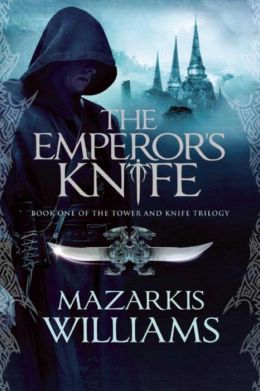
The Emperor's Knife, Mazarkis Williams
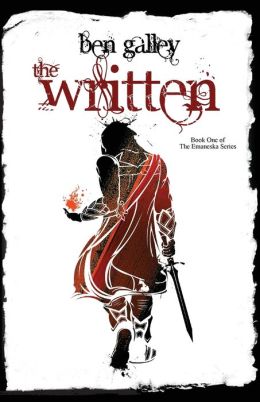
The Written, Ben Galley
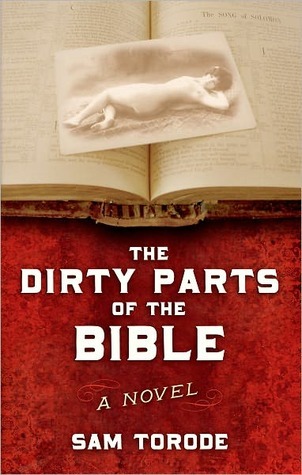
The Dirty Parts of the Bible - A Novel, Sam Torode

Two fantasy novels, one mainstream novel set in 1930's Hobo America.


Mazarkis Williams' The Emperor's Knife sets up some intriguing situations, with interesting characters, against some fairly standard fantasy backgrounds: A decadent empire where the royalty have little connection or empathy with common citizens, a Mongol-ish society of plains-dwelling horsemen, a barren desert complete with buried cities.

When young Prince Sarmin's father dies, his oldest brother Beyon becomes the new Cerani Emperor.  To prevent possible power struggles or revolt, all other siblings, even the youngest infant, are slain by Eyul, an assassin tasked with being the Emperor's Knife, the only person able to slay those of royal blood without damnation.  But Sarmin survives, secretly kept in a tower room for nearly twenty years as a last-resort backup if Beyon fathers no new heir.

The empire is also troubled by a strange plague, the Pattern, where geometric marks appear on victims' skins, eventually driving them to agonizing death or into violent madness.  And the marks have begun to appear on the Emperor's own skin.  Court intrigues from several different directions ensue.  A young woman from the plains is negotiated to marry into the Empire, to be Sarmin's bride, causing further complications.  The woman, Mesema, has her own secret; she can sometimes see the Pattern in the movements of grass in the wind or shifting desert sands.

Multiple characters in multiple locations sometimes make it slightly difficult to keep track of all the plot threads from chapter to chapter. (Perhaps that should be called Game-Of-Thrones Syndrome?)  I sometimes had to pause at a chapter's beginning to remind myself of who this chapter's main characters were, and what their situation had been in earlier chapters.  But well-written enough to keep wanting to know what happened next.  Overall a satisfying read.

I read Emperor's Knife free as one of Barnes & Noble's Free NOOK Fridays offerings.  Current price: Barnes & Noble Nook $9.99, Amazon Kindle $11.06.

- - - - -

Ben Galley's The Written is graced by a spectacularly striking cover.  Rather than trying to dummy up a cover himself, as a lot of self-published writers do, he went to a crowdsourcing site,  Crowdspring, where he was able to offer a precis of his book and have a number of designers submit book cover proposals.  The one he accepted, by designer Mikael Westman and artist Claudia West, really stands out from the crowd of self-published books and would be no surprise coming from any leading publisher.  For $200, Ben Galley got more than his money's worth, and he's used the same team to do the covers for further books in this fantasy series; I believe that's called "branding". Smart move on Ben's part.

Unfortunately, the cover is the best thing about the book.  The MacGuffin of the novel is yet another Evil Book of Evil Evilness.  (See my review of the film Equinox.)  The protagonist is yet another bad-ass warrior-mage.  The background is yet another generic fantasy landscape, with dragons, AND vampires, AND werewolves. 

Other writers have all done that before, and better.  Much better.  The characters, even the main character, feel stereotyped and flat; their personalities seem painted on, rather than arising from inside.  One thing I noticed about Galley's writing is that he tends to over-write his scenes.  A character comes into a room.  He walks over here.  He walks over there.  He picks something up.  He puts something down.  He sits down.  He stands up again.  Et bloody cetera.  Very little of which advances the plot or reveals character.  My fingers kept itching for a red pencil as I read the first few chapters.

Full disclosure:  I didn't get beyond the first three chapters.  I looked at some of the reviews on Goodreads, and a lot of people gave high praise to the book.  (Rule of thumb for ratings on Goodreads: Deduct at least one star to adjust for irrational exuberance.)  I might have liked the book better, and possibly kept on reading, if I was forty or fifty years younger and hadn't, essentially, read books just like it a hundred times before.  For some people, it might be fresh and interesting material; to me, it's just stale.

Read free as author's promotion.  Current prices: $3.99 Amazon Kindle

- - - - -

Sam Torode's The Dirty Parts of the Bible - A Novel was my favorite of the three books. 

Like The Written, TDPOTB has a very professional cover.  Torode has an advantage in that regard; he's a professional book designer in his normal life.  This even carries over to the interior design, with an old-etching-style illo at the head of each chapter.  He also uses red-colored text on occasion, but I didn't feel it added anything that italics wouldn't have done just as well.

Tobias is the son of a preacher in 1930's Michigan, caught between the demands of a strict father and the raging hormones of young adulthood.  When his father loses his church and is blinded in a freak accident, it's up to Tobias to return to estranged family in Texas and recover a hidden stash of cash his father had concealed on a brother's farm before moving the family to Michigan.

Things get complicated when Tobias loses all his travelling money in his first-ever encounter with a prostitute.  Tobias ends up travelling by rail with Craw, a black hobo and  loquacious dispenser of dubious wisdom.

Adventures ensue.  Tobias learns some lessons from the school of (literally) hard knocks, and falls for a young woman whose last three boyfriends all died, reputedly because of an Indian curse.

The book is breezy and easy and fast-moving.  It's a picaresque bildungsroman set in 1930's small-town America and the rail-riding hobo subculture.  It's fun and funny.  Tobias is the narator of the story, and his "voice" is wonderful.  Some reviewers complained the ending came too quickly.  I felt a bit that way myself, but mostly because I wanted  to read more about Tobias and Craw.

(Note: The book is inspired by the Biblical story of Tobias and the Angel.)

Read free as author's promotion.  Current prices: $2.99 Amazon Kindle

5/08/2013

My Grumpy Afternoon

Hilde and I went to Best Buy yesterday afternoon.  Best Buy is one of those stores that keep showing up on lists of "Major Chains That Will Probably Go Out of Business Soon."  I used to shop there fairly often, but their selection isn't as good as it used to be and their customer service likewise has gone downhill.

But we needed to go there, because  we were shopping for an e-reader, specifically an Amazon Kindle.

I don't like to shop with Amazon. I don't like their predatory business practices or their monopolistic aspirations.  I don't like that they saddled the Kindle with a proprietary format.  But we're trying to find an ebook reader that Hilde can use and the Kindle appeared to be the only one on the market with a "Voice Command" capability.

Hilde's had severe rheumatoid arthritis for forty-five years.  Besides the damage to the rest of her body; her hands and fingers have grown twisted and weak.  On top of that, over the last ten or so years she's developed a bad "essential tremor" in her hands and forearms, a shaking that can get so extreme I've seen her shake a soda straw out of a water bottle. She has, on a good day, maybe 5% of a normal person's use of her hands.  She can't use a keyboard, or a touch pad, or a mouse.  (Ever wondered why I show up on the Internet so much, but she doesn't at all?  That's why.)

She's able to turn pages in a book, sometimes using the edge of her palm, but even that's growing more difficult for her. 

Eventually, Hilde won't even be able to turn pages in a book by herself.  So we've been trying to find if there's an e-reader on the market that will turn pages and other tasks by voice commands.  And the Kindle seemed to be the only one with any kind of "Voice Command" listed as a feature.

But I couldn't find much actual information online about the Kindle's Voice Command, so I wanted to try it out before we spent the money on it.  And Best Buy appeared to be the only place where one could actually handle and try out a Kindle before buying.

I'd come across some online accounts of people who'd gone to Best Buy back around 2011 to do a hands-on with the Kindles there, only to find that the display models were all locked in demonstration mode, with only limited functions available.  Since that's friggin' stupid, I figured Best Buy might have freed up the Kindles' functions by now.  So I called up the closest Best Buy and asked.

"Are your Kindles locked in demonstration mode?"
"No, they're not."

You know how this story's going to end, don't you?  Not quite yet, though.  Because when we went to the closest Best Buy, their wi-fi network wasn't working.  (An electronics store that can't keep a wi-fi network up and operating.  Ponder that thought for a moment.)  And they said the Kindle needed wi-fi to use the Voice Commands. 

Wait, what?  There aren't any printed circuits between the microphone and the processor chip?  It has to broadcast your voice an entire inch or two to the rest of the machine?

Years ago, I came up with Geek Rule #1: Whatever can be done with a computer, must be done with a computer.   I think the 2013 version may be: Whatever can be done via wi-fi, must be done via wi-fi.

So, no Kindle try-out there.  Back in the car and off to the second closest Best Buy.  And of course you know what we were told there:

"All our Kindles are locked in demonstration mode, so we can't show you that feature."

That was a waste of about an hour and a half and a gallon of gas.  Frustrating.

If a customer calls with a question you don't know the answer to, answering "I don't know" is acceptable customer service.  Answering "I don't know, may I put you on hold while I get someone who does?" is even more acceptable.  Making Shit Up off the top of your head is NOT acceptable customer service.

No wonder Best Buy is going down the tubes.  I'd thought about shopping there for a new keyboard after looking at the Kindle, but after hearing the Kindle's were locked in demo after all, we left without looking at anything else.

To top it off, after getting home, I did some more searching online and finally found a better description of what the Kindle's Voice Commands actually does:  It takes the command options off various menus and reads them out loud to you.  It's actually an accessibility feature for visually-impaired or blind users, not for people with impaired dexterity or unable to use their hands at all.

So there don't seem to be any hands-free options available for e-readers.   I find that not only frustrating, but perplexing.  I can tell my smartphone to make a phone call; I can tell it to make a Google search.  But I can't tell my e-book apps to "Turn Page" or "Go Back" or "Go To [page ___, or Chapter ___ ]".  The closest thing I found was an app for people with reading-comprehension problems that highlights a few lines at a time and moves the highlighted area slowly down the pages; but that's still not voice-operated, you just start it with a button push and stop it with another.

I would think there'd be a market for a hands-free e-reader, and not just for people with disabilities.  Cookbooks, craft instructions (knitting patterns?), car repair manuals, other activities where your hands are in use and/or greasy or soiled; a hands-free option would be great for those kinds of books.

What?  "There's always Dragon," I hear someone saying.  The only online article  I could find about trying to do that with a Kindle is this one from all the way back in 2009, and it still requires being able to use the mouse a lot.  I couldn't find anything that said you could use Dragon with a Nook, and several spots that said you couldn't.  And Hilde's tried to use Dragon before, and found the learning curve dreadfully frustrating and steep.  (She may give it another try, after some dental implants are completed at the end of this month and her regular speaking mannerisms are back.)

In the meantime, it looks like we wait until someone comes out with an actual hands-free reader.  *grump*

4/26/2013

The Brave Free Books

I've been checking out a few e-books offered for free online.  One of the popular marketing techniques for getting people to read and talk about your e-book is to offer it for free for a period of time.  In the case of self-published e-books, this usually seems to be for several months, followed by a low price ($2.99 seems to be the most popular price point, or $0.99 if the work isn't a full novel) being attached.  Ideally, the free copies downloaded create word-of-mouth that brings people in to actually buy copies after the free period expires.  (And some self-publishers just want people to read their work, so they keep their work available for free.)

Some traditional publishers also offer particular books either heavily discounted for a short promotional period, or actually free.  The latter mostly seem to be for the first volume in a series, offered briefly when a later volume is just coming onto the market.

One place I've found for those offers is Barnes & Noble's "Free Fridays" .  Every Friday, a free book is available for download to a Nook e-reader or Nook app for a week.  Categories vary from week to week: epic fantasy, romance, urban fantasy, mainstream lit, suspense, inspirational, etc.  So it's a bit of a potluck, but I've downloaded a few Nook books from the Free Friday offerings, and generally find them worth reading.

Well . . . not always.


EVERYBODY'S DAUGHTER by Michael John Sullivan is a Christian time travel fantasy, wherein a troubled father travels back in time to Jerusalem about the time of Jesus' arrival and subsequent crucifixion.  He's followed by his teenage daughter, but the daughter arrives at a different time, when her father is nowhere to be found.  (This is not their first trip back to Jerusalem.  In an earlier book, Necessary Heartbreak, they apparently went back together and met Judas Iscariot, among others; the father still carries some of Judas' silver in his pocket from that earlier trip.)

The book unfortunately opens with a howler of a first sentence: "Jingling the silver coins between his fingers that he had retrieved so many centuries ago[...]".  The writing, on a sentence level, gets better after that, but I had trouble with the characterization and plotting of the book.  The characters seemed inconsistent, especially some of the secondary characters.  Ideally, plot flows naturally from characters' actions as they react to the events around them.  I got the impression that Sullivan had plot points planned, and he forced his characters to move towards those plot points whether they wanted to or not. 

The big choking point came with trying to figure out just when the father and daughter had made their separate arrivals in Jerusalem.  For most of the book, it appeared that they had arrived at least months apart.  I also wondered if the father and daughter's presence might have created two separate timelines.  But if the last few chapters Sullivan seems to be saying they were not only in the same timeline, but only a few days apart.  My suspension of disbelief was blown out the window.

(Sullivan's portrayal of Jesus is also a very "Godly", Sunday-school version.  When I read portrayals of Jesus, I always prefer they be more human, with smelly armpits, dirty feet, and flashes of temper and despair.)

I wanted to like the book.  I didn't.

(Since the Free Friday offering, the price on the ebook has gone back to $3.47)


From the general free listings at B&N, I also tried one of the "always-free" books:

KILL-BASA: NEW FLAVORS IN ZOMBIE HORROR by Sean Graham is a collection of five zombie stories.  Most are very pulpish, with slam-bang non-stop action.  "Dummies" gives a more traditional, non-Romero style zombie story.  "Lee's Decision" has Robert E. Lee making a Faustian bargain to win the Civil War.   But neither story impressed me, despite the attempt to put a twist on the idea of zombies.

The one story that did impress me, a bit, was "Ten Count".  It was a Romero-style zombie story, a meme that's getting really stale.  But it impressed me because the characters in it weren't cartoons or cardboard, which was where the other stories mostly failed.   But it needed polish, it needed still more depth to the characters.  It impressed me because it had potential, but it also disappointed because it could have been harder-hitting, even moving, with a bit more work and development. 

Sean Graham's had a number of other short stories published in small press venues.  I'd like to see him get a little more experience and practice before I try his work again.


I've got a few more of the Free Friday offerings and a couple of other free books sitting in the Nook app on my smartphone.  I may make "The Brave Free Books" a semi-regular feature here.

4/23/2013

Self-Publishing: Should I Join The Crowd?

I've been eyeing the explosive growth in self-publishing over the last few years, and pondering the idea of collecting together some of the short stories I've had published over the years.  I'm about 98% decided to go ahead with the idea.

One of the reasons I haven't considered it more seriously until now is that self-publishing was mostly seen as the field of amateurs and not-ready-for-prime-time writers, the people who in previous eras would have paid big bucks to vanity presses for a pallet-load of printed books that would sit in their garage forever afterwards.

The explosion started with the advent of print-on-demand publishers like Lulu.com, where the book's contents would sit as an electronic file on Lulu's servers, until -- Oh, my god! -- someone actually ordered and paid for a single copy to be printed and shipped.  Drawback: Printing books one at a time, even with largely automated and standardized printing technology, made the books pretty expensive.

Enter the spreading democratization of e-books.  The Amazon Kindle, Barnes & Noble's Nook, the Sony Reader, e-reading applications for computers and smartphones, all creating an increasingly large base of customers who are willing to read books off a video display instead of having an actual printed book in their hands.  Concurrent with that, an explosion of services started coming available for ordinary citizens to produce and make available their own works.  (Smashwords is probably the best known.)

The problem is making your e-book stand out from the crowd.  Traditional publishers are still able to provide better design, marketing and distribution resources, even for their shiny new e-book divisions.  Professional writers, if they can, still prefer to be published that way.  But we're seeing more and more pro writers using e-books as a way to replace the largely vanished backlist, to republish their older books that have gone out of print and had rights reverted.  This, in turn, is giving self-published e-books a new measure of respectability.  I think this is a great thing.

But there are still all the amateur and not-ready writers out there still publishing their darlings in the thousands, with their thumbnail images cluttering up display pages on numerous bookseller websites.  It's a mob out there, and you need to stand out somehow.

One way is to have a name.  That's one reason more and more professionals are putting their backlist books online; they're a known quantity, so they make (usually slow, but steady) sales based on that recognition factor.

I don't have much of a name.  People tend not to remember mostly-short-stories writers, even the best (otherwise Robert Reed would be a science-fiction superstar).  My output of short stories, even at my best, was usually only two or three a year, not all of which sold.  Scattered over thirty years, I didn't get published frequently enough to be remembered much between stories, or over my writing career (such as it was).  Google me, and the big-ticket item that stands out is the Star Trek: The Next Generation episode ("Clues") I wrote back in 1990.  That's not fodder for re-publishing.

But a few of my stories still get occasionally remembered and inquired about, particularly "Death and the Ugly Woman".  So if I were to put together a collection, that be the lead story.  So I've got a little (tiny) (eensy-weeny) advantage over a complete newbie casting their work into the waters of e-commerce.

I've looked over my published stories; not all of them have a crying need to be reprinted.  I'm thinking of collecting about a half dozen of the best published stories, plus a few selections from my unsold efforts.  (Some of those unsold works deserved their fate, but a few of them... they may not have sold, but dammit... they should have!)

One of the most common things that makes people look askance at self-published books are the covers.  Designing a good book cover is a skill.  It's not a skill quickly learned.  I've got a little (tiny) (eensy-weeny) advantage there, too.  I've been putting out fanzines since the early 70's, and have been goofing around with covers and illustrations almost all that time.   Some of those goofing-arounds worked, some didn't, and I hope I've learned a little about which is which in all that time.  Plus I did the rough concept and design for COPPER STAR, the "Southwestern fantasy" anthology I edited and produced for the 1991 World Fantasy Convention.  (It got a professional tweaking before going to press.)

Looking at cover images of self-published books is great fun, if you like having your eyeballs bleed.  There are some... spectacularly dreadful... covers out there.  And lots and lots more that loudly go *clunk* or are just just unimpressive.  So one of the most important things I'd want would be a striking cover.

I've been looking at a lot of images online.  Because I'm a tightwad, I'd prefer to use cover elements available under public domain.  A detail from Heironymous Bosch got strongly considered; some other images got considered and abandoned.  I also came across a couple of pieces on DeviantArt that could have been suitable, if I decided to go ahead and pay for repro rights.  But then I stumbled across the work of Kathe Kollwitz, a German Expressionist artist in the early part of the 20th Century.  In particular, a 1921 print called "The Widow" seemed to have strong resonance with the themes of sorrow and loss in "Death and the Ugly Woman".  In keeping with the laudatory principle of K.I.S.S. (Keep It Simple, Stupid), I worked up a cover rough using just black and white and red.  I think it works pretty well.

This isn't a finished cover yet. The title font has some clear kerning problems, and the author-name font looks too heavy. I put this together using some of the default fonts that came installed with Word 2007, and the final fonts will almost certainly be different.  Typographical placement and size will probably be tweaked a bit, too.  But it shows what I'm trying for, and I think it works pretty well.
 
A cover's just one step. Final decisions on contents, supplementary material, page design, proofreading, ISBN and barcodes, pricing, etc., etc., are still ahead.  Plus considerable study and fiddling around with software and resources to make it the best I can make it.  (thebookdesigner.com has a lot of useful articles.)  I figure it will probably be several months before the collection is available, probably longer if my second shoulder surgery happens in the interim.


2/25/2013

Barnes & Noble News, and Speculation On The Future of Bookstores


News outlets report that B&N founder Leonard Riggio wants to buy out the retail assets of Barnes & Noble.

It strikes me that this could portend the return of "catalog stores", the way department stores (Sears, Wards) marketed themselves outside big urban areas many, many years ago.  These were smaller storefronts in smaller communities.  There might be some samples of popular goods, or even minature models of large items like furniture, but it particuarly gave people a venue where they could browse the big catalogs offering thousands of items (or come in with a list from their home-delivered catalogs) and order what they wanted.

With bookstores, it might work with a combo-type store.  Keep the coffee/cafe areas, where people can sit and relax.  Browsing books might be done in a variety of ways:  Bestsellers and highly marketed items might have the full books available, for people to be able to buy immediately.  Publishers might provide sample chapbooks containing anywhere from a few to 50 pages, excerpts from books being pushed but not as hard as the bestsellers.  There could be racks of publicity sheets for still other books for customers to browse through.

There'd also be plenty of electronic displays and kiosks.  Cafe tables would have built-in displays, or wi-fi for customers' own devices.  This enables still more browsing, with touch-screen access to further information or sample excerpts.

One easy thing to do with those displays is to display a shelf of books SPINE-OUT.  One of the annoying things about shopping for books online is that the screens always show the covers of the books.  That's one of the reasons I stil like to go to brick-and-mortar bookstores, where the vast majority of books are shelved spine-out.  When you're a frequent or complusive reader (and there are still quite a few of us), you have an awareness of what's going on in your preferred genres or areas of interest.  At a regular bookstore, I can browse through thousands of spine-out books, looking for familiar or interesting authors and titles, in a short period of time.  Doing the same with online, cover-out, displays takes... a LONG time.

Using touch-screen technology, you could touch a title on that spine-out display and convert it to a full-cover image.  Provide a button on that full-cover image, touch, and you get a more in-depth screen with jacket copy, reviews, excerpts, etc.

You choose a book you want, then what?  If you're a regular customer, you might have a customer card with a bar code/magnetic strip.  Have a card reader built into the display, and just swipe your card.  If you want an e-book version, and your portable device is wi-fi enabled, you can download it on the spot, with your account automatically billed.  If not, or you want a physical copy, the display might also be able to send your purchase info electronically to the front desk, or print out a physical receipt containing a bar code for your purchase.

You go to the front desk.  For e-books, the clerk hooks up your device to their server and downloads the book for you.  You're done and on your way.

If you want a hard-copy version of the book, these near-future bookstores will also have machines like the Exprsson Book Machine, capable of printing out and binding a hard-copy with 5-10 minutes.  Place your order, enjoy a cup of coffee and a doughnut, pick up your completed book, and you're done.

I'm not certain if this will best happen with a central, controlling retailer, or with franchise-type operations, or by a return of independent booksellers.  (There'd be smaller overhead for square footage, but larger overhead for equipment.)

The near-future bookstore wil need to combine the best attributes of both brick-and-mortar bookstores and the online book sites.  I think the above description comes pretty close.