8/22/2013

Grumpy Man


Interesting what you can do with your lower face when you leave your dentures out, no?

I had to shave off my beard again (my awesone, awesome, beard! *sob*) when I went back to work, but I decided to try leaving the moustache on.

Besides the obvious current resemblance to an Internet meme, when the moustache was still a bit thin, looking at myself in the mirror kept leaving me with an urge to tell people not to squeeze the Charmin:


And when it gets a bit fuller yet, there'll probably be a resemblance to yet another moustachioed gentleman:


8/21/2013

The Brave Free Books -- August 2013

Being an occasional/monthly review of books and ebooks I've read for free, either through author/publisher promotions, giveaways or sweepstakes, or just because the authors value readers over income.

Some General Thoughts About Self-Publishing/Indie Publishing

I've been reading some of the free indie-published books available for a few months now.  Some of the books have been worthwhile, and wouldn't have been a surprise to see traditionally published.  Others... have problems.

There's a lot of advice, and a lot of "advice", out there about self-publishing.  A lot of it deals with marketing strategies, but that's putting the cart before the horse.

The first priority, the major priority, indeed the only priority until it's accomplished is this: Write a good story.

I take a lot of the conventional wisdom about learning to write that good story with a large grain of salt.  You don't have to "write a million words first".   You don't have to "write every day".  Et bloody cetera.

To write a good story, you have to read.  You have to read a lot.  You have to read widely.  You have to read critically, with an awareness beyond just the action of the narrative, an awareness and perception of how a story or book is plotted and presented and ordered.   You have to learn, even if that learning is largely self-taught.

(I may expand on some of these thoughts in a separate post.)

What I see in some of the self-published works out there are writers who haven't learned those lessons yet, or aren't diligent in applying those lessons to their own work.

For example:

- - - - -

DIESELPUNK ePULP SHOWCASE, stories by John Picha, Grant Gardiner, Bard Constantine and Jack Philpott

Editing.  It's kind of important. 

The copyright on this ebook is in John Picha's name, so I assume he was the nominal editor.  I say "nominal" because the book seems more assembled than edited.  I say this particularly because the worst story in the book is John Picha's own "Pandora Driver".

The narrative in "Pandora Driver" switches from present tense to past tense.  And back.  And back again.  And again.  And again.  Not just between sections of the story, but between paragraph, and between sentences in those paragraphs.  And even sometimes in the same sentence.

One of the reviews on Amazon mentions how this story "switches from past to present"; it seemed to be mentioning this as a feature, not a bug.  No, it's just bad writing.  It's writing that's horribly, desperately, in need of revision and rewriting.  As the tense-changes continued, and continued, and continued, I eventually felt like I was being slapped across the face with every change.

I don't generally feel angry over bad writing.  This is an exception, because the excess of this story shows disrespect.  It shows disrespect not only to me as a reader, but it shows Picha's own disrespect for himself by allowing this to go out in public.  I don't know what Mr. Picha's experience is, or what access he has to writers' workshops or reliable beta readers who might have given him a heads-up about the story's problems,but this story was not ready for prime-time or even for the self-publishing market.

(I had other problems with how "Pandora Driver" was written, but the constant changes between past and present tense was the overwhelming problem.)

It was also disrespectful to the other contributors to this anthology.  Because the other stories in here were reasonably good pulp adventures set in somewhat-alternate universes.  But, for me, the problems with "Pandora Driver" were so overwhelming that it cast a pall on any enjoyment of the rest of the book.

Current Kindle price: Free.

- - - - -
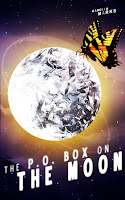
P.O. BOX ON THE MOON by Camilla Marks

Here's another example where the editing process broke down or was insufficient in the writing of a book.

It started out promisingly.  High-school student Persephone Miller is already trying to deal with the breakup of her parents' marriage, plus problems at school, when she finds a letter in the mailbox from someone purporting to be not only 1) the first astronaut sent to the moon in an alternate non-Neil-Armstrong timeline, but 2) trapped and forced to do the bidding of the evil Master of the Moon in that and numerous other timelines.  Eventually she's able to meet with the stranded astronaut, Andrew, in the brief periods he's physically present on Persephone's timeline.

There were some things in the earlier parts of the book that irked me.  For one, Andrew seemed to be something of a jerk, repeatedly telling Persephone there's so much about his situation she doesn't know... but he's not going to tell her.  For another, Persephone feels an almost-instant Bella-and-Edward Twilight-style attraction towards Andrew.  (Can we please bury that noxious trope once and for all?)

But Persephone was interesting enough to keep reading (though I thought her best friend Padme was actually more interesting).  I got the occasional impression that story elements and complications were being introduced without a clear idea of how they would be resolved.  But I was curious to see if everything could pull together at the end.

Ehhh... not so much.  The last section, where Persephone herself ends up on the Moon, doesn't work well.  Events and actions and resolutions feel rushed and improvised.  And when we finally meet the Moon Master himself, he is such a stiff caricature of a megalomaniac villain, with excruciatingly wooden dialogue, that one almost expects to see him twiddling the tips of a narrow black moustache and proclaiming "BWA-HA-HA-HA!!!"  After at least moderate attempts to imbue earlier characters with actual personalities, the final section reads almost as if written by a completely different writer.

The conclusion was... acceptable.  It felt rushed and forced, but the villain was defeated, disasters were averted or reversed, and if the ending was bittersweet, at least it looked like Persephone's life was back on track.

And then Camilla Marks decided to put in a twist-ending.  Which negated everything, and made the entire story an exercise in futility.  I'm not going to throw my smartphone across the room, but if I'd been reading a physical book, I might have.

The impression I got from POBOTM was that it was written "seat-of-the-pants" style, starting with the original idea of the mysterious letter appearing in the mailbox, but without a clear idea of how the story would develop or conclude.

I also noticed that about halfway through the book, more and more typos and editing errors began to appear.  This got to be bothersome.

Add in the rushed feeling of the final section, and I can't help making a guess that this novel probably started out as a NANOWRIMO project, with a last minute rush to complete the manuscript before that one-month deadline was crossed.  And that it received insufficient revision and editing afterwards, before being published.

I think NANOWRIMO is a great idea for a lot of people.  If nothing else, every November thousands of people don't hang out in bars or pool halls or on street corners.  But when you write an entire novel in a single month, you're probably not going to end up with a good novel.  You might end up with the possibility of a good novel.  But not without a lot more work.

When you finish a story, you need to  put it in a drawer for a while -- maybe a few days, maybe a few months -- and let it lie fallow long enough that you'll be able to go back to it eventually with a fresher eye and mind, better able to see what does and doesn't work, and what needs to be saved or discarded or rewritten.

Finding an honest group of beta readers, who'll give you their unvarnished opinions, is also a good idea.  (Don't ask your Mom to read your book.  You can ask your spouse or children, because if their response is just too damn mean, you can always divorce the spouse or disown the kids.  But if your Mom tells you your manuscript sucks, you're totally screwed.)

And edit, edit, edit.  The first half of POBOTM was pretty error-free, but the increasing numbers in the latter half tell me any editing was either done in an increasing rush, or that Marks started going into "my eyes glazed over" mode by that point and just didn't see the later typos and errors.  One recommendation I see over and over in self-publishing articles is to pay for a professional copyeditor to go over your manuscript.  I'm coming to agree with that advice more and more.

This was read free as part of author's promotion.  Current Amazon Kindle price $4.99.

- - - - -

Before you succumb to despair, let me tell you there are self-published ebooks out there worth the reading:

- - - - -

THE WIZARD, THE FARMER, AND THE VERY PETTY PRINCESS by Daniel Fox.

There's a sub-genre of fantasy I call "Fluffy Fantasy".  These are generally humorous takes on the various tropes and cliches of regular fantasy. (See many of Robert Asprin's or Simon Hawke's books for examples.) Sometimes they're affectionate twists, sometimes they're critical satires.  TWTFATVPP is one of the former.

Idwal the Farmer lives close by the most boring town on the map, and he likes it that way.  Things Happen, of course, despite Idwal's best efforts, and he finds himself sucked not only into adventures, but adventures in the company of an annoyingly self-centered Princess and endangered by the machinations of a disgruntled Wizard who's raised an army of the dead.  He's a reluctant -- very reluctant -- protagonist who eventually becomes an actual hero and Gets The Girl in spite of his most rational instincts.

This is not classic literature, but it's not meant to be.  It's an entertaining evening's reading by a writer skilled enough to keep the tone light and amusing throughout, but not pushing it so far as to drop into offputting silliness.  (I'm not sure if this is the same Daniel Fox who wrote the much more serious "Dragon In Chains" fantasy series, but it's certainly written to a professional standard.) 

E-book read free as author's promotion.  Current Amazon Kindle price $3.99.

- - - - -
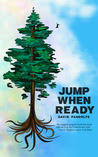
JUMP WHEN READY by David Pandolfe

There's a subgenre of fantasy dealing with "the Afterlife", of the world inhabited by dead people, either before or instead of going to the tradtional Heaven or Hell.  Richard Matheson's What Dreams May Come, or Kevin Brockmiers's A Brief History of the Dead are some examples.

This is in a similar vein, for a Young Adult audience.  Teenager Henry has died in a drowning accident that looked like suicide to observers.  He comes to in the high branches of a fir tree, encountering the spirits of several other deceased teenagers.  In Pandolfe's version of the Afterlife, the spirits are able to create their own surroundings (similar to Matheson's book); there are limitations on how much they can interact with the real world, however.

Henry, besides dealing with his own death and the end of the normal life he expected to have, also has two goals: To let his family somehow know he did not commit suicide, and to protect his older sister Bethany from the online "friend" who turns out to be a predator.

David Pandolfe pulls this off nicely.  The narrative flows smoothly, the characters are well-presented and believable; it's a very professional, very entertaining and engaging story.  (Pandolfe's background includes teaching writing courses.  That probably explains a lot.)

The cover is also noteworthy, a simple but vivid image nicely representing the contents of the book.  It turns out to have been done by (I assume) Pandolfe's wife Samantha.  (Lucky fellow, to have another talented resource in the household.)

Read free as part of author's promotion.  Current Amazon Kindle price: $2.99.

- - - - -

That's it for the latest installment of "Brave Free Books". 

8/13/2013

Personal Update: Work and Podcasts

I've been back at work for three weeks now.  No major problems with the arm, so long as I take regular doses of analgesics to keep it from aching badly.

Before I went back to work, I'd started a practice of taking about an hour's walk each night, and listening to podcasts during the walk.  This was mostly for the various online SF magazines like Lightspeed and Clarkesworld that also do audio versions of some of their contents.  I've also been listening to the BBC Drama of the Week, which are usually interesting. Those walks usually let me listen to five or six hours worth of podcasts each week.

At work, I'm allowed to listen (so long as I only use one earbud) to radio or other audio while doing my night patrols.  It's a big help in staying awake in the wee hours.  So I've been listening to a lot more podcast material, adding other SF content (Beneath Ceaseless Skies, Apex), NPR content like The Splendid Table, and I've also been trying out some of the audiobooks from Librivox.

Librivox is an interesting project, recording public domain books by crowdsourcing chapters or sections to volunteer readers.  Because of the volunteer nature, the quality of reading can vary a lot from chapter to chapter.  Some of the readers come across as very professional, with clear voices and enunciation; some of the other readers... well, it's nice that they volunteer for a worthy project.

But instead of five to six hours of podcasts per week, I'm now listening to probably at least twenty hours.  This turns out to use a remarkably large amount of the data limit on my smartphone, enough to put me over that limit.  Meaning extra charges.

Humph.  I upgraded to a larger data plan (5Gb instead of 2Gb), but I should probably try and keep a better eye on my data usage.   One thing I can try is downloading podcast material on the home computer and loading it onto my Droid before the work week.  I say "try" because I've tried loading library audiobooks (via Overdrive) onto the phone that way, and I haven't been able to get it to work. I'll have to give it another go.

8/06/2013

So It Goes Over The Cliff

The Mary Sue reports that Amazon's Kindle Worlds, a program that licenses literary/media properties to produce (oxymoron alert!) "commercial fanfiction", has cut a deal for doing so with the estate handling the works of... Kurt Vonnegut.

Wait, what?  I double-checked the date to make sure it wasn't April 1st, and then the URL to make sure I hadn't ended up on The Onion's website.

Vonnegut had such a distinctive authorial voice, and style, and mindset, that I have trouble thinking that any Vonnegut-derived works for Kindle Worlds will be anything other than pastiche, rather than homage (or even passable imitation).

Vonnegut had such a distinctive authorial voice, and style, and mindset, that I have trouble envisoning a scene where someone in the Amazon Kindle Worlds offices would actually think the thought that, "Hey, let's license Kurt Vonnegut's work for the Kindle Worlds program!"

Vonnegut had such a distinctive authorial voice, and style, and mindset, that I have trouble envisioning anyone involved in handling his estate thinking the thought, "Hey, let's license Kurt's works to the Kindle Worlds program!  I'm sure Kurt would approve."

Well, actually Vonnegut might... not approve... but be phlegmatic about the idea.  Here's a quote of his:
"Go into the arts. I'm not kidding. The arts are not a way to make a living. They are a very human way of making life more bearable. Practicing an art, no matter how well or badly, is a way to make your soul grow, for heaven's sake. Sing in the shower. Dance to the radio. Tell stories. Write a poem to a friend, even a lousy poem. Do it as well as you possibly can. You will get an enormous reward. You will have created something."

But you know what.  I'm not phlegmatic about the idea.  It just seems like a bad, sad joke.

Another Vonnegut quote, a bit more reflective of my reaction:
“Where do I get my ideas from? You might as well have asked that of Beethoven. He was goofing around in Germany like everybody else, and all of a sudden this stuff came gushing out of him. It was music. I was goofing around like everybody else in Indiana, and all of a sudden stuff came gushing out. It was disgust with civilization.”


7/30/2013

The Arm: Back To Work, Finally

At the end of our last thrilling installment, the arm pain had improved remarkably for no discernible reason, enough so that the second shoulder surgery set for the end of June was cancelled, and I was referred to a physiatrist (musculature specialist) at Mayo for further evaluation and probable return to physical therapy for a while.

Between various scheduling, authorization and paperwork complications, I didn't see the physiatrist until July 19th.  The arm pain had continued at the reduced level, staying mostly in the lower half of that 1-to-10 pain scale doctors like to use, and with the use of aspirin and Tylenol several times a day, mostly in the lower half of that lower half.  And those lower levels keep me out of the Stupid Zone, where you can't ignore the pain and you can't think.

At those lower levels, I felt it was possible to finally return to work.  The upper arm and shoulder still feel stiff and sore a good amount of the time, but it's probably never going to be completely pain-free again for the rest of my life.  The doctor had a job-description sheet from my workplace, and we went over the list of tasks I need to perform at work, none of which I felt were un-doable.  (Some of them, involving high reaches or other extensive arm movements, need to be done with the left arm rather than the right, but they can be done.)  So he gave me a release to return to work as of July 22nd, within the right arm's limitations.  He also wrote orders for me to resume physical therapy for the next month, and scheduled an appointment for re-evaluating my progress in late August.

Then I had to contact the HR rep at work to see about actually resuming work.  Monday the 22nd I met with her and the assistant Security head, then went around the property with him to demonstrate that I was physically able to do the work required.  I didn't have much problem with any of the tests, so I got a call Tuesday morning to say I was back on the work schedule starting Thursday night.

Completed my first work-week back at work Sunday night.  No major problems.  The shoulder got stiff and sore a few times, but that was expected and I carried a small pillbox with extra aspirin/Tylenol tablets for those occasions.  So it looks like I'm a working stiff (heh) again.

The Arm saga isn't over quite yet.  My job isn't strenuous; it doesn't require lifting or moving any heavy objects, at least not any I can't handle left-handed.  But there's still a lot of stuff at home I'm not capable of without over-stressing the arm.  That's one of the reasons for going back to physical therapy, to try and get back some of the strength and stamina the right arm has lost over the months.  (The right arm is visibly thinner than the left, due to muscle loss from lack of use.)

So there'll probably still be occasional post about "The Arm" from time to time.   But, at least as of now, they should be farther apart in time and hopefully less dramatic than some of the posts have been.

7/25/2013

A Hard Search For Hard Case Crime

Last week, one of Amazon's "Daily Specials" for e-books was offering a $1.99 price on a wide selection of e-books from Hard Case Crime.  The Hard Case Crime line, edited by Charles Ardai, has re-published a number of hard-to-find hardboiled works by writers such as Donald Westlake and Robert Silverberg, as well as new fiction in the hardboiled/noir tradition by a number of newer writers.  It's one of the publishing companies whose output I like to keep an eye on, so I was tempted to buy and download a number of titles to my smartphone's e-reader app.

But... I've noted in the past that I don't like Amazon's business practices, so rather than spend money there, I hied over to the Barnes & Noble website to see if the same discounted prices for Hard Case's books were being offered there.

Well, they were, but it was a hard slog to find the Hard Case titles on bn.com.  On Amazon's site, entering "Hard Case Crime" in the search window brought up a full list of HCC's available titles.  Reset the filter for "Low To High Price", and all the $1.99 titles were shown grouped together.

Not so much on Barnes & Noble's site.  Enter "Hard Case Crime" in bn.com's search box, and you end up with a scattered selection of ebooks, most with the word "Hard" in the actual title or in the description, and only a very few of Hard Case's books included.

B&N has an "Advanced Search" option available, with "Publisher" as one of the search categories available.  So I tried that, entering "Hard Case Crime" and got... zero results.

Wait, what?  Zero results?  How could that happen, when the first, regular, search had at least brought up a couple of Hard Case titles?

So I went to the page for one of those titles that had come up in the earlier search, and went down to the "Details" section.  Where I found that the listed publisher for the Hard Case title was "Titan".

Ho-kay.  So apparently Hard Case has a deal with Titan Books for distributing and marketing their books, much like DAW Books has a deal with Penguin.

But to find Hard Case titles on B&N's site, you have to enter "Titan" as the publisher.  If you don't know about the arrangement (I didn't until I ran into this), you can't search for Hard Case Crime under its own name.

When you do a "publisher" search for Titan, though, you end up with all of Titan's own titles (a lot of science fiction and other categories), with Hard Case titles mixed into the batch.

A list of categories appeared to the left of the search results, so I clicked on "Mystery & Crime" to narrow the search.  And finally I ended up with a list of mostly Hard Case titles (a few books from other arms of Titan also appeared).  Do another sort by price, and I finally had a list of the Hard Case titles on sale.

Well... not quite.  I noticed that several titles I'd seen in Amazon's search results weren't included in the B&N results.  One was David Schow's Gun Work.  A specific search for that title brought it up on B&N's site, but apparently it's not categorized as "Mystery & Crime" or "Thriller" like almost all the other Hard Case titles.  There were a few other titles in similar straits.

Why does Amazon give more inclusive, and a lot easier, search results?  That's simple:  On each product page for Hard Case titles on Amazon, after each title is the parenthetical addition of "(Hard Case Crime)".  So entering "Hard Case Crime" even in Amazon's general search window will trigger a hit on all those parenthetical additions.  Plus they list the publisher as "Hard Case Crime", not Titan.

I'd rather spend my money at Barnes & Noble than Amazon.   But it would be nice if B&N didn't make it so damn hard.

(I'm sending a separate copy of this post directly to Hard Case editor Charles Ardai.  This problem really needs to be fixed, because it means a damn good publisher is losing potential sales on the second-most popular bookselling site.)

7/23/2013

This & That - links, etc, July 2013

Top Ten Books About Disability -- Interesting article from the Guardian, with an even more interesting comment thread.

- - - - -

On a Reddit thread about time-management & motivation for writers, this tip from NinjaDiscoJesus seems like it might be particularly effective:
Find a picture of your favourite relative who has died.
Print out several copies. Write YOU ARE NEXT in red ink across them.
Post on the wall on your writing area.

- - - - -


The Court Martial of Billy Orps.  Art blog Underpaintings tells the story of a WWI war artist.  Neat story, great art.

- - - - -

The best worst one-line movie synopsis I've ever seen:

"Batman Returns-1992; Michael Keaton, Danny Devito; An abandoned child returns as an adult and searches for his parents."

- - - - -

Radio show This American Life recently re-broadcast a 1998 episode, "Notes On Camp", about summer camps, which I caught part of while driving around on errands.  The final segment, about Color Days, felt like I was listening to a story from another planet, a planet populated by unmedicated lunatics.  I guess this may be how some people feel about cosplayers or other of the more fanatical members of science fiction fandom.  ("And it seems pretty simple, but everybody here will tell you, no one back home understands it. None of their friends, nobody. There is just a gap between camp people and non-camp people.")  Audio here.  Transcript here.

- - - - -

7/14/2013

Fragments -- One of My Old ST:TNG Story Pitches: "However Improbable"


Back in the old days when STAR TREK: THE NEXT GENERATION was still in its first run, one of the more notable episodes was "Redemption: Part II", wherein Denise Crosby returned not as Tasha Yar, but as Sela, Tasha Yar's own daughter.  When, in the episode "Yesterday's Enterprise", the Enterprise-C returned to its original timeline from the alternate-the-Federation-is-getting-its-ass-whupped-timeline created when Enterprise-C was kicked into the future, the not-killed-by-black-porridge-monster Tasha Yar of that alternate-future returned with it, surviving the Enterprise-C's final battle but being captured by the Romulans, eventually bearing a child, Sela, by a sympathetic captor.  The alternate-Tasha was captured and executed after trying to escape with her young daughter.  Sela was raised as a Romulan, and became an enemy of the Federation.  (Are you with me so far?)

This was when I was still trying to sell movie scripts after having sold my own episode, "Clues", to ST:TNG.  But I still pitched story ideas to ST:TNG several times before the Toxic Boss From Hell threw a spanner into my writing gears (that unpleasant story told here), so when I cleaned out my office recently, a file folder of some of those story ideas came to light.  One of them was intended as a direct follow-up to the mystery of Sela.  I think subsequent episodes made my story idea obsolete before I had a chance to make the actual pitch.  But I thought it was a pretty good idea, so I present it here for the edification of the masses and, y'know, History!

"However Improbable"

(Picard tries to solve the mystery of Sela, the impossible daughter of Tasha Yar.)

With Sela, Picard faces the greatest puzzle of his career.  If this woman is actually Tasha's daughter, how could she be?

There may be one way to find out:  In the records of the original Enterprise is a description of a 'machine', the "Guardian of Forever", which reputedly can provide access to all of time and all possible times.  It is the nearest thing to omniscient that the Federation has yet found.

The Enterprise heads to the Guardian's planet.  After Kirk & Company had returned from their adventure years earlier, the Guardian had, apparently, shut itself down.  It had resisted all efforts at activation and analysis since then.  An unmanned station had been left there, to warn of any activity or the approach of any ship,

Picard's efforts to rouse the Guardian are to no avail.  Then -- surprise! -- Sela comes on the scene.  Seeking to regain face after the debacle of the Klingon civil war, and noting that the Enterprise was heading towards a planet the Federation appeared to hav deliberately concealed information on, she had cloaked her ship and followed the Enterprise.

It is the presence of Sela that activates the Guardian.  She is a chronic anomaly, the result of events that could not have occurred in the natural course of destiny.

The arrival of Sela and her guards, the sudden activity of the Guardian, all cause a pitched conflict.  The end result of which is that Picard, Data, and Sela go thru the Guardian's portal.

And end up... on the Romulan home planet, twenty-six years before, shortly before the altrnate-Tasha's doomed escape attempt.

Which is great from Sela's point of view: She's got twenty-six years of advance information she can give the Romulans.

Picard and data subdue Sela, disguise themselves, and enter the Romulan capitol in search of... answers.

Eventually they reach the alternate-Tasha.  And learn this is not the Tasha they knew, but one from a universe where the Federation had been fighting a losing war against both the Romulans and Klingons.

But the arrival of Picard and data gives Tasha back the hope she had lost, the hope that she might someday return to Federation space, even one differing from her own

Tasha insists on meeting the grown Sela.  She is shocked to see what her daughter has grown to become.  It increases her resolve to escape her captivity, and to take her young daughter with her.

The story can go two ways from here:

VERSION A:  Sela is also affected by th meeting.  She had previously nown her mother only thru her four-year-old's memories.  Now she sees Tasha with an adult's intelligence and reasoning.  And she sees a woman loyal to her people, loyal to her child.  A woman that Sela has to respect.

And when, during the escape attempt, the caper is blown and capture is imminent, Sela knocks out Tasha, swaps clothing, and takes her place.  When Sela-as-Tasha is executed, that triggers a return of the portal to return Picard, Data, and Tasha to their proper place.

Which means that only Picard and data return to the Enterprise they know.  The alternate-Tasha has been returned to her own universe, to a fate unknown.

VERSION B:  But despite Picard's efforts to persuade Tasha to a different course, to change history, Tasha is still betrayed by the young Sela, caught, and executed.

Returning to their own time, Picard is not only wracked by his own guilt, but Sela now considers him doubly responsible for her mother's death.  She departs, an even worse enemy than before.


Well, there you go.  I like to think that this pitch actually got bought, produced and broadcast, in some alternate timeline.


"Wibbly wobbly timey-wimey? WTF?"

Free Advice From A Chinese Epic


Punch a tiger in the head,
and suddenly all your other problems
will seem small and insignificant.


The character portrayed here is Wu Song, one of the 108 heroes of the Chinese literary epic The Water Margin.  This particular rendition is from a double-set of playing cards depicting each of the 108 characters (52x2, plus 4 extra cards).  In the epic, Wu Song ends up in this particular situation after way too much drinking.  (Who would have guessed?)  But he ends up beating the tiger to death with his bare hands anyway.  So I guess the actual lesson to be learned is "You don't have to be drunk to beat a tiger to death with your bare hands, but it sure seems to help."

7/08/2013

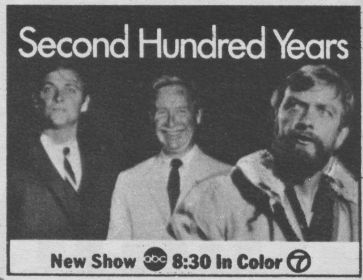
Revisit: The Second Hundred Years


Tor.com's recent review of The Curiosity, a literary novel by Stephen P. Kiernan, reminded me of an old television sitcom from the 1960's that had a similar starting premise, The Second Hundred Years.

image from ctva.biz
TSHY starred Monte Markham in a dual role, both as Luke, an Alaskan Gold Rush prospector buried and frozen in a 1900 avalanche, only to be found and revived in 1967, and his nearly-identical grandson Ken, an uptight banker. Luke's own son Edwin was played by senior-citizen actor Arthur O'Connell; at the start of the series Edwin is considering moving to a retirement home until Luke is discovered.

I recall that Markham was a "bright" actor, with charisma enough to play the outgoing Luke and acting chops enough to play the restrained Ken. Arthur O'Connell was a well-regarded character actor, who brought a respectable amount of dignity to a comedic role. The scripts were silly but fun, and occasionally got a little bit deeper into how what was essentially time-traveling would affect someone from the past, and how present-day people would be affected by him in turn.

(A few years after this show, Markham's career took a big hit when, in a spectacular example of miscasting, he was cast as the title character in The New Adventures of Perry Mason. This was not that many years after the original Perry Mason series had ended, and the American public still identified the character of Mason with Raymond Burr's slow-moving, grim-faced portrayal. The slim, energetic Markham's presentation flopped big-time, badly enough that the series is still remembered as one of the worst remakes ever. Markham rarely played lead roles again, though he appeared in character roles fairly frequently.)

TSHY only lasted one season, despite its two stand-out actors. With proper casting, I could see this one being revived for a modern-day version.

The pilot episode can be seen (in 3 parts) on YouTube. Not available on Netflix, or much anywhere else, alas. (There's one online DVD vendor that claims to have the full season available, but there have been a significant amount of complaints about undelivered orders and lack of response.)

7/01/2013

Toll The Dead

 
Ashcraft, Andrew - Age: 29
Caldwell, Robert - Age: 23
Carter, Travis - Age: 31
Deford, Dustin - Age: 24
MacKenzie, Christopher - Age: 30
Marsh, Eric - Age: 43
McKee, Grant - Age: 21
Misner, Sean - Age: 26
Norris, Scott - Age: 28
Parker, Wade - Age: 22
Percin, John - Age: 24
Rose, Anthony - Age: 23
Steed, Jesse - Age: 36
Thurston, Joe - Age: 32
Turbyfill, Travis - Age: 27
Warneke, William - Age: 25
Whitted, Clayton - Age: 28
Woyjeck, Kevin - Age: 21
Zuppiger, Garret - Age: 27

These are the names and ages of the 19 firefighters who died yesterday fighting the Yarnell wildfire here in Arizona.  They were trapped when a sudden reversal in wind direction sent the flames rushing in their direction.

Sometimes we forget that Nature can be just as vicious and destructive and deadly as an armed enemy in a war zone.

So young, so young.  Just old enough, many of them, to have started families of their own.

(list via Talking Points Memo)

6/30/2013

Reporting Convention Harassment Protects Everyone

Over on John Scalzi's Whatever blog, where popular and/or controversial and/or multiply-commented posts are published with some regularity, the latest is Reporting Harassment at a Convention: A First-Person How To, a guest post by Elise Matthesen regarding a recent encounter with a sexual harasser at a convention and the procedures she followed in filing a formal complaint and report to the convention's committee and the harasser's employer, with suggestions and advice for others who wish to report similar incidents.  Recommended reading for everyone, not just convention committees.

I posted the following as one of the 250+ comments there, but I'm going to publish it on its own here as well:

- - - - -

I’d like to tell a story. It’s a true story, but it’s an ugly story. It’s a story that still mystifies me in a lot of ways. But think it shows the importance of reporting harassment.

In the late 70′s, at a fairly small convention, two young female Star Trek fans reported to the con committte that they’d been molested by one of the attendees. I don’t know what the details were, but “molested” was the word used.

The committee acted promptly, to their credit, and confronted the suspect.

Here’s the problem: The young women had reported that their molester was “a guy named Bruce, from Arizona.”

I was the only guy named Bruce from Arizona at that convention. So it was me the concom came to.

I was completely mystified, and said so. I was taken to the young women for a visual confirmation.

I was NOT the guy they’d been molested by. They had never spoken with me, and I had never spoken with them. I was in the clear.

The molester was never identified, to the best of my knowledge. But if those young women had NOT reported the incident to the concom, if they instead had just passed the story around the gossipvine that they’d been molested by “Bruce from Arizona”, I might have been privately labeled as a creepy molester. (Since the two Trek fans looked about 14 or 15, possibly as a child molester.) And in that instance, I might never have found out about those allegations for months or possibly years.

This begs the question, of course, of why the guy chose to identify himself as “Bruce from Arizona”. And if he was deliberately falsifying his name, doesn’t that say his intent was to molest those young women? Was it just a name picked from the air? Or was he somebody who knew me, and for unknown reasons wanted any possible blowback to come back on me? Why would someone do that to me? This still mystifies me, nearly forty years later.

So, goddamn, ladies, REPORT, REPORT, REPORT! Because not only does it make it possible to have real consequences for harassers and to deter other harassers, it allows someone who’s been misidentified or falsely accused to try and clear their name.

- - - - -

(slightly edited for several typos in the original and a math error; this actually happened a bit less than forty years ago, not "over forty years" as I originally wrote.)

6/27/2013

This and That -- links, etcf.

Carried Away By Imagination.  From the always amusing, frequently outstanding Tragedy Series webcomic.

- - - - -

The iPad Commode Caddy.  Only 99.95 from the Hammacher Schlemmer catalog.  If the roll runs out, you can log onto drugstore.com and order more.  Or, if you're actually thinking of ordering one of these (or, actually, anything from the H-S catalog), you might realize you have just too much money.  (Sending half that money to me instead would help relieve that problem.  No, don't thank me.  I'm just that kind of guy.)

- - - - -


Harry Connolly writes REMO WILLIAMS: The (Problematic) Adventure Begins, about the 1985 movie based on The Destroyer, a series of "Men's Adventure" paperbacks published since the 70's.  Harry says he hasn't read any of the books, but I read a fair number back in the day.  They were actually more of a satirical series in adventure clothing; the authors (Warren Murphy and Richard Sapir, mostly) routinely used issues of the day as springboards for the books' plots.  Politically incorrect and definitely not sophisticated, but frequently amusing; the interaction between Remo and Chiun was often laugh-out-loud funny.  I wouldn't recommend a steady diet of the books, but trying one or two when you're in the mood for brain-candy might be worthwhile. 

Since I was working as a letter carrier and "going postal" was one of the social concerns back then (there were numerous incidents where postal workers cracked mentally and went on shooting sprees); I had a special appreciation for the particular volume pictured here. (Postal employees plot an armed revolt against the US.)

The first Destroyer adventure is available online as a free e-book: Created: The Destroyer.  Several dozen other early volumes are available as e-books for $0.99-2.99.  More recent physical books, including a 2010 fan-written anthology, are available from Amazon and other booksellers.

- - - - -

If Your Dog Could Text:  Via Accordion Guy Joey Devilla, Text From Dog.

- - - - -

At Kung Fu Monkey, John Rogers writes "ARCANUM: Immortality Is So, So Creepy", an interesting post about some of the thinking behind his ongoing webcomic for Thrillbent.  A quote:
"In 1900 the percentage of the American population over the age of 45 was 17.8%. In 1950 it was 28.4%. As of the last census the share of the US population over 45 is 36.4%. Hell, the 65+ share's gone from 4.1% in 1900 to 13.3% in 2010. More and more people still in the society, with greater and greater influence, still constructing societal and legal norms based on emotional, psychological, cultural and technological frames of reference that are less and less relevant."

- - - - -

In 1934 the newly formed Decca Records signed Bing Crosby as the first artist on their label.  The second artist signed had a name that must have been a joy to small children and immature adults everywhere:  "Whoopie John" Willphart, American polka pioneer:


Why, yes, the vocals (by Don Burqhardt) are a little creepy, aren't they? 

6/24/2013

Not The Arm: More Medical Fun & Adventure

So, spent about four hours at the Mayo Hospital Emergency Room Sunday.

When I woke up Sunday morning, I sat up... and fell over.   I always thought "The room is spinning" was just a figure of speech.  No, it actually felt like the room was spinning.  And like I was being pulled strongly to the right while the world spun.

Over the years, I've had occasional instances of being light-headed, dizzy, or unsteady on my feet.  This was worse than any of those times.  At least an order of magnitude worse.

I fell back on the bed.  After a moment or two the dizziness and vertigo stabilized.  I tried sitting up again, more slowly... and the second wave of vertigo was even stronger than the first.  This time I had rising nausea to go with it.  Fortunately there was a plastic tub next to the bed that I was able to grab and dump the contents from to use as a catch basin; what I was having were not quite dry heaves.

The retching woke up Hilde, who asked me what was going on.  "I am having severe dizziness and nausea.  I think I need to go to the Emerency Room.  I am scared."   No joke about that last.  It was frightening to be that helpless.  If I'd been someone living alone, I would have had to crawl to the phone to get help.

Hilde called for Tabbi.  We used Hilde's wheelchair to get me out to the car, then Tabbi went back in and brought Hilde out.

What I was diagnosed with was "Benign Paroxysmal Positional Vertigo".  That will not be the name of my next rock band.

What it is, is that small granules in the inner ear, otoconia. break loose from their usual location and travel into part of the inner ear where they're not supposed to be, totally throwing off your perception of position and balance.  The main treatment is a series of physical head-turning exercises that are intended to let the loose particles fall back into their normal area, where they can slowly dissolve.

from dizziness-and-balance.com
 
The head exercises I was put through at the ER triggered more vertigo and nausea, but which calmed down after several moments focusing on a fixed object.  Once I'd gone through them, there was a lot of subsequent relief.   (The exercises are effective in about 80-90% of cases.)  I was given several prescriptions for nausea and dizziness, and told I should not only continue the exercises at home if I continue to have problems, but make an appointment with the PT/Rehab department for further practive with the exercises.

I feel better.  Tired, and still a bit light-headed, but at least I can walk and move around (a little carefully, to be sure).  Probably shouldn't drive until I've recovered more.

One of the possible causes for BPPV is head trauma.  I didn't get a hit on the head, but Saturday was spent clearing out the room I'd used for my (rarely-used) office and making it able to move our son Chris, who's moving back in with us for a while after several years living in Las Vegas, into that room.  That raised a lot of dust and dander, and I spent the day wheezing and dripping and sneezing.  When I sneeze, I tend to sneeze hard, and I wonder if forty or fifty hard sneezes, along with at least a hundred noseblows -- I went thru three handkerchiefs -- might have added up to the same effect a smack up the side of the head might have had.

Just another fun day at Chez' Arthurs.  I could do with a little less fun of this sort.

- - - - -

Saturday night, among the other stuff cleaned out of the office was a box of papers and corespondence that had belonged to Edna, Hilde's mother, before Edna's death about ten years ago.  We went thru it to see what should be kept, what trashed, and what sent to Edna's granddaughters.  I was struck that the commonest theme in letters from family and old friends, most of whom were around Edna's age, was to talk about the latest medical problems they or others were having.

It led me to wonder if I spend too much time on this blog talking about our own medical issues.  Let me know if I'm straying into TMI teritory, OK?

6/21/2013

The Arm: The Weasel Gets Weird -- Unexpected Changes


In my last update to the seemingly neverending saga of coping with the breaking the hell out of my right arm last December, I reported that I'd decided to go ahead and have the revision surgery, replacing the standard replacement humerus head implanted in December (and which had seemed to be failing, resulting in quite a lot of pain) with a Reverse Shoulder Arthroscopy, a different type of replacement shoulder joint, hopefully (but not guaranteed) to reduce the amount and intensity of pain I was having.  That surgery was scheduled for June 28th.

And then, beginning last weekend, an unexpected thing started happening.

The arm started hurting less.

Quite a lot less.  I've gone from six extra-strength Tylenol and two Aleve (or, occasionally, one Aleve and a Celebrex) per day (about the maximum dose you're supposed to take per day, or start worrying about liver and kidney damage), all the way down to one or two Tylenol and one Aleve.

I don't know why it's hurting less.  No apparent rhyme, no apparent reason.  I don't know if it's going to last, or if the pain will rack back up at some unknown future date.  But you'd think I'd be relieved and grateful for the change.

In actuality, I experienced an anxiety attack that came close to panic.

For the first several months after the acccident, I seemed to be making slow but steady progress in recovery.   So I thought I'd probably be able to go back to work sometime in late spring.  Then the arm started getting worse again in late March, and planning on the future went into a cocked hat.

When I finally decided, about two weeks ago, to go ahead with the second surgery, it meant that I'd know what my life would be like for at least rest of the summer and most of fall:  Surgery at the end of June, the arm in a sling and immobilized 24/7 for at least six weeks, followed by at least several months of physical therapy.  After that, things would be uncertain again until it became clear if the second surgery had made any improvement.  But at least I knew what would be happening for the next four months.

But when the arm suddenly started hurting less, I had to start wondering if the second surgery was absolutely necessary.   The arm still aches, but the aching is a lot less intense, and I've had very few of the sharp stabbing pains I was having before.  Two weeks ago I was at the point where I was sure I needed the new surgery.   And now... I'm not sure.

Which makes the future very uncertain again.  Which is very upsetting and anxiety-inducing.

So.  After nearly a week of the lower pain levels, a few decisions have been made.  The revision surgery has been cancelled.  I'll be referred to a physiatrist, a specialist in Physical Medicine and Rehabilitation.  We'll try and work with the arm to get its strength and stamina back, or at least better.

I'm still, whatever happens, going to end up with pretty significant limits on how high I can reach with the arm, and how much I can carry.  But the pain has been the most compelling problem these last months.

I also had an out-of-pocket consultation with the doctor who does Hilde's pain-management for her own significant problems.  I got a fairly long list of non-surgical, non-narcotic treatments and medications that might be useful in dealing with the remaining pain.  (One of the suggestion was for adhesive Lidocaine patches.  Hilde used those for pre-surgical pain before one of her joint replacements some years ago, and we still had a partial box way at the back of a closet shelf.  So I tried one today for the aching, and it helped significantly.  This makes me hopeful that I can continue to keep the pain at tolerable levels.)

(Hilde and I get most of our medical care from Mayo, who I mostly think of as wonderful.  But surprisingly the only pain-management service Mayo has is part of the Neurology department, and it only treats back pain.)

There are still a lot of  "If's" and "Maybe's" and "Possibly's" floating around in the forthcoming months.  But for the moment, things are better than they have been.

In the last update, I said the pain was like having a bad-tempered weasel strapped to my arm.  It growled a lot, and sometimes started clawing and biting at the arm.  Well, at least for the time being, it's being a lot nicer, growling less, and even sleeping some of the time.

A well-behaved weasel.

6/16/2013

Data Point: Re the SFWA Bulletin

Part of the recent kerfuffle in SFWA (Science Fiction Writers of America) was over Issue #200 of the SFWA Bulletin using a warrior woman in a chainmail bikini (on a snow-covered mountainside!) for its cover image.

I was a SFWA member from the late 1980's until 2009.  (I let my membership lapse then because I hadn't written or sold anything for three years by that point.)  Since I tend to keep anything printed on paper longer than any sensible person would, I thought I'd go thru the back issues of the Bulletin I still had accessible, and see if anything similar had ever been used on a cover.

It turned out I had 55 issues from 1988 to 2005 available on my shelves.  (There are more unshelved issues in various boxes, but I didn't want this to turn into a Major Project.)  Those earliest issues, under the editorship of George Zebrowski and Pamela Sargent, used photos for their covers:


Mark McGarry was the next editor, and he tended to use fan-art or repurposed professional art for the Bulletin covers.  Mark Kreighbaum followed, and tended to use semi-abstract digital art for the issues he edited.

The closest thing I found to a "cheesecake" cover was this George Barr cover under McGarry's editorship.  The slim, aesthetic alien might be considered "beefcake". 


To find a woman in a skimpy outfit, you have to look a little closer, in the background behind the central figure.


Shades of some of the costumes on the original Star Trek!  Is it sexy?  Yes.  More to the point, though:  Is it absurd?  Barr's illustration looks like a desert environment, and most of the characters seen are wearing loose and/or skimpy clothing.  So I don't think it's completely absurd or ridiculous.  (One might complain she's overdressed -- did I just say that? -- in a fashion sense for a casual trip to the marketplace.)

Compare that to wearing a metal (!) chainmail (!) bikini (!) in the snow (!!!).

So overall, from the issues I have on hand, I'd have to say that the SFWA Bulletin has pretty well avoided depicting unrealistic women on its covers.

The woman depicted on Bulletin #200's cover is actually supposed to be Red Sonja, the character originally created in one of Robert E. Howard's stories.  The notorious chainmail bikini actually originated in the Conan comic book version published by Marvel in the 1970's.  But that wasn't what Red Sonja originally wore in that comic.  A little history:

The original artist for the Conan comic was Barry Windsor-Smith, and the outfit he dressed Red Sonja in was this one:

 
And here's a representation of the three faces of Sonja, as described by Howard and later illustrated by Roy Krenkel, as Barry Windsor-Smith drew her, and the chainmail bikini re-design by Esteban Maroto:

illustration by Frank Thorne

Red Sonja was originally a pirate, so the Howard/Krenkel version makes a lot of sense: Loose clothing for fast movement on deck, and, hey, you really don't want to wear a lot of heavy armor or chainmail when one of the main dangers in a shipboard melee is getting knocked or pushed overboard.

On the Windsor-Smith version, the bare legs and granny-panties are problematic, but the chainmail shirt gives good protection to torso and arms; it's even got a high collar for some neck protection as well.

And then we come to the chainmail bikini.   *sigh*  This is a ridiculous costume.  This is an absurd costume.  It's been ridiculous and absurd since the very first time it appeared in comics.  People have been pointing out how ridiculous and absurd it is since that very first appearance.  Yet it's been the iconic costume for the character for over thirty years.  And it's also been one of the main things people point to when they say comics are read by frustrated pimply teenagers who wank off over women depicted in comics because they can't get their hands on real porn (or real women).  It's also one of the main things people point to when they say the comics industry caters to those wank fantasies for the sake of sales.  I can't really think of a good counter-argument to that.

In the wake of SFWA Bulletin #200's cover, people objected to the absurd, ridiculous figure depicted there.  In response, Jim Hines -- who's done a number of popular posts at his own blog about unrealistic depictions of women on SF/Fantasy book covers -- was asked to contribute an article about images of women in SF to Bulletin #202.  I haven't read that article, and I don't know if it's been published anywhere except in the Bulletin, but I'd expect that Jim probably said a number of wise and perceptive things about the subject.  (Whatever he may have wrote seems to have been thoroughly overshadowed by the blowback on Mike Resnick and Barry Malzberg's "lady editors/anonymous attackers" column.)

The sad thing is that an opportunity was missed.  If the Hines article had been commissioned for the issue with the Red Sonja cover, it could have been prominently highlighted on the cover text.  In that instance, the Red Sonja depiction might have served as a visual aid, an adjunct, a bad example, for the Hines article.  Publishing it two issues afterwards was an instance of locking the barn door after the horses bolted.


A Few Brief Thoughts On MAN OF STEEL


It's loud. 

It's long.  (Only two hours.  Felt longer.)

I could have used a break from the extended action/fight sequences.

Also: "shaky cam". 

The sheer amount of destruction in Smallville and Metropolis must have caused at least 50,000 or so deaths.  (I was reminded of Kid Miracleman's London rampage in Alan Moore's MIRACLEMAN comic.)  Yet we see few actual deaths or bodies, and most of those seem to be members of the military.

I'm getting a little tired of seeing falling/collapsing/exploding skyscrapers in sci-fi action movies.  (This movie has a lot of falling skyscrapers.)

I thought the best action sequence in the movie was actually the rescue from the oil rig.  A bare-chested Henry Cavill on fire actually communicates a sense of this guy is not fucking human better than a skinsuited-and-caped Henry Cavill punching through buildings like a bullet.  Once he puts on the costume, he becomes less interesting.*

Perry White and other Daily Planet employees, with the exception of Lois Lane, barely impinged on the story.  (And why did the writers decide to turn irritating twit Jimmy Olsen into irritating female twit Jenny?)

In short, while I enjoyed the movie, I had some reservations, and thought it could have been better done.


*I have a fondness for superheroes whose costumes are "off the rack".  Wild Dog is one, a vigilante whose crime-fighting outfit is largely sports equipment and who drives a pickup.  I especially liked Iron Munro, a "pre-Superman" in t-shirt and jeans Roy Thomas created for YOUNG ALL-STARS, a teen-team-superhero comic set in the early days of WWII.


Wild Dog
Iron Munro


6/09/2013

The Arm: Latest Update, or, Wearing the Weasel

At last report, in early May, I was waiting to see a different orthopedic surgeon for a second opinion before committing to the Reverse Shoulder Arthroscopy surgery  recommended by my doctor at Mayo.  The second surgery will "probably" reduce my current pain levels, but even if fully successful I'll still have reduced strength and range of motion in my right arm for the rest of my life.

I saw the second doctor on May 8th, then waited for him to send his recommendations to the Workmens Comp office and to my Mayo doctor.  Then waited until the Mayo doctor got back from an out-of-town trip to have a phone consult with him.  Then waited until my Workmens Comp caseworker got back from her out-of-town trip.  Then found out she needed a second recommendation for the surgery from my Mayo doctor, to reflect that he'd received and considered the second doctor's findings.  So had another consult with the Mayo doctor a couple of days ago, rather more in-depth than we'd done over the phone.

The second doctor also recommended surgery, but the RSA surgery was one of several possible paths he suggested.  Another was to re-do the standard joint replacement surgery I'd had in December, with hopefully better results. And of course the option of learning to live with chronic pain was also brought up.

That last one's not really an option, however.  At this point, pain relief is my top priority.  Rebuilding strength and stamina in the arm come second.  Range of motion actually comes in third.  It doesn't really matter how much range the arm has, when it hurts too much to actually do  much of anything with it.

The degradation in usability and increase in pain that started in late March seems to have not only continued, but even worsened somewhat in the last few weeks.  I still usually manage to get through the days by taking lots of Tylenol and Aleve, but there've been a couple of recent days where the pain was sharp enough and persistent enough that I took half a T-4 (Tylenol with codeine) to get some relief.

Besides taking a lot of analgesics, I try to avoid activities that might cause the persistent ache to turn into sharp stabbing pain.  When I move the arm, I try to move it slowly and carefully.  I try to not lift or carry anything weighing more than a few pounds, or for a long period.  In short, the most effective pain-avoidance strategy has been: Don't do jack with that arm.

An extra hassle to all this has been not just the pain, but the fear of pain, the apprehension that trying to do anything with the arm will set it off.  I'm in a near-constant state of hyper-alertness, constantly asking myself: "How far will I need to reach out with that arm?  Can I do it using my other arm?  Will I have to lift, or squeeze, or twist anything?  Will that hurt?  How badly will it hurt?  How long will it take to recover?  Is this worth doing at all?"  This, above and beyond the physical pain, gets tiring.

I do do stuff with the arm, but nothing heavy, and nothing for an extended period of time.  Even very light work like sorting papers will increase the pain after a while.  When the aching gets intense, I've found I can reduce the recovery time by putting the arm back into its post-surgical sling and letting it rest for several hours.  And one of the few things I've found that I can do for a reasonable length of tie is sit at the computer and keyboard; by resting my right arm on the arm of the chair and bringing the keyboard and/or mouse closer, I can even type or browse the Internet for a reasonable stretch.  (One of the main reasons why you're seeing more postings here than prior to the accident.)


Yeah, something like this.
It's sort of like having a bad-tempered weasel strapped to your arm.  Most of the time the little bastard just lays there and growls; but sometimes he'll have a sudden psychotic break and start clawing and biting.
"Don't do jack" is not a viable long-term strategy, however.  Recovery isn't just a matter of being able to return to work; it's being able to do the things that need to be done in my personal life.  That includes being a caregiver to Hilde, and being able to do the household chores and tasks that need doing.  If I wasn't having the chronic pain, I'd be able to cope with a lot more of that even with a partially-disabled arm.

When I talked to my doctor at Mayo on Friday, he went on at some length to impress on me that there are no guarantees that I'll come away from the RSA surgery with any significant improvement.  I will definitely still have an impaired range of motion, and I won't have as much strength and stamina in that arm as before the injury.  There will "probably" be less pain, but there may still be some pain in the arm afterwards, and there's the possibility of no improvement in that area either.

From the medical articles I've read, shoulder surgery in general is a tricky job.  It's even trickier for a traumatic shoulder injury like mine, and trickier still for a revision procedure to a previous surgery like the RSA would be. I came across a discussion forum for shoulder-surgery patients, and one of the participants whose problems also started with a traumatic injury -- thrown from a horse and trampled -- has had six surgeries and still has chronic pain and little use of her arm.

I don't want more surgery.  I don't want more months of an immobilized arm followed by months of physical therapy.  But if the alternative is to try and live with the current status...

Well, even the hope of improvement is something.

In short, I'm scheduled for the RSA surgery on June 28th.

If the results of the surgery are good, I'll probably be able to return to work sometime in the fall.  If the results are less than good, I may have to start thinking in terms of Long Term Disability (and all the paperwork and complications that would entail).

6/07/2013

Blast From The Past - POINTS OF HONOR by Thomas Boyd

Points of Honor, Thomas Boyd, New York, Charles Scribner's Sons, 1925

Points of Honor is a collection of short stories by Thomas Boyd, best known for his novel of World War I soldiers, Through the Wheat.  TTW received a good deal of critical acclaim and support, including from F. Scott Fitzgerald and Maxwell Perkins.  Boyd was seen, for a while, as one of the leading lights of post-WWI American literature.   But his subsequent books never got the sales or acclaim of that first novel, and his fame faded away.  He died of a stroke at age 37; Boyd's own war-time injuries may have contributed to that early death.

Where Through the Wheat's focus was on actual combat experiences, Points of Honor is mostly set during periods between the actual fighting, or in rear-line settings, or (in "The Long Shot") follows a soldier's return to the US after being injured in a mustard-gas attack.

Here's a telling quote from the Foreword:
"...these stories may serve to correct the impression that I hate war.  That would not be my business.  But it is my business not to glorify it; it is my business to perceive it truthfully and to set down those perceptions in such a way that they may be shared by whoever is kind enough to read them.  Hate war!  Hate the ambitious who casue the wars and the financiers who grow fat on them.  Hate the people who believe sleek lies.  If we must hate let us hate causes; it is futile to hate effects.  If I hated war I should lie about it, thereby saving myself a good deal of sweat, labor, and anxiety occasioned by the endeavor to be honest."

Not all the stories are fully successful.  Several come off as more like extended vignettes.  "The Uninvited", with its Registration of Graves Department investigator tasked with finding poorly documented burial sites, works well as a traditional detective story.  Most end with irony, frequently bleak. 

"The Long Shot" is the story that got turned into the 1930 movie BLAZE O'GLORY, mentioned at the end of this post.  Reading some of the information available about Boyd, it turned out he despised movies for leading people away from reading books.  It must have galled him to the max that the bleak protagonist of this story, a former soldier trying to return to his previous career as a machinist, was turned into a Broadway entertainer for the film version so song and dance numbers could be inserted into the movie.  Considering how dark and bitter the original story is, it's hard to imagine the movie's changes being anything but a travesty.  (I don't know if copies of BLAZE O'GLORY have survived the 80+ years since it was filmed.  At best, I suppose it might have been something like Steve Martin's 1981 PENNIES FROM HEAVEN, a bleak Depression-era story with musical inclusions that left audiences mostly off-balance.)

Duncan Milner, the protagonist of  "The Long Shot", shares a good deal of experiences with Boyd himself.  Gassed in the war, unable to return to his previous machinist career, troubled relationships in his personal life.  Milner, a sniper in the war, ends up murdering the lover of his unfaithful wife.  The final irony is that the judge who vilifies him for taking another man's life and sentences Milner to the scaffold is the same man who, as an officer in the war, spotted targets for Milner to kill.

"The Long Shot" is also noticeable because of its portrayal of a veteran struggling to readjust to civilian life, his struggles with the after-effects of his war injuries, and his difficulty in finding assistance, both from friends and family and from the government, in making that transition.  It's an early portrayal of PTSD and the difficulties faced by returning veterans.  As such, it's still a very pertinent story.

His better-known novel Through The Wheat can still be found in print, but I don't believe this story collection is currently available anywhere.  I read a copy of the original 1925 printing via InterLibrary Loan.

6/06/2013

On SFWA & Sexism

If you follow many of the SF/Fantasy sites online, you've probably seen, at the least, references and links to a recent brouhaha over the SFWA BULLETIN and some particularly provocative comments by columnists Mike Resnick and Barry Malzberg.  If you haven't, author Jim Hines has compiled a long list of links to sites discussing the controversy.

I've said before that my Number One Rule is "Try to not be an asshole."  I got around to formulating this rule by, well, being an asshole on past occasions.  I've learned to recognize some of that past assholery (sometimes with an assist from other people rubbing my nose in it), and try to use that recognition to avoid further social or intellectual errors.

Sometimes that assholery involved attitudes toward or statements about women.  There are a few fanzines or apa mailings from my early years in fandom that I would gladly burn all copies of, because of offhand remarks I made therein.  (Was I really so utterly clueless?  Yes.  Yes, I was.)

So it disturbs me to see two writers I respect, even older than I am, writing words that the twenty-year-old-me might have written.

I'm especially sad to see such a lack of self-awareness from Barry Malzberg, who I've always regarded as one of the Wise Old Men of Science Fiction.

One observation: When I was growing up in the 50's and 60's, "Lady" was what my family named our dog.


(Caveat: I am sixty goddamned years old, and not being an asshole is still a work in progress.  I try; I'm not always successful.)